
The basil by the kitchen door and the dormant hosta beside it do not need the same rescue. A frost forecast can make every pot look urgent, but spending the evening wrapping everything often leaves the most vulnerable plants waiting until last. Start by deciding which plants need a warmer place, which might benefit from an overnight cover, and which need a separate winter storage plan.
You can do that with an old sheet, a few supports, and space you already have. The useful savings come from matching the response to the plant and the weather, not from finding a household material that supposedly makes every container frost-proof.
Read the forecast as more than one low number
Look at the hourly forecast, expected wind, and the following day's temperatures. A brief dip near freezing followed by a mild afternoon presents a different problem from a windy night that begins a run of freezing days. Note whether the forecast is for your actual neighborhood or an airport some distance away. A balcony, exposed deck, and sheltered courtyard can experience different conditions.
Iowa State University Extension's frost guidance explains that leaf surfaces can frost even when reported air temperatures remain slightly above freezing. It also warns that covering becomes unreliable around temperatures below 28 F, with damage possible in less severe but prolonged freezes. Treat that as a warning about the limits of covers, not a survival rating for your plants.
For a tender plant you particularly want to keep, uncertainty favors moving it into appropriate shelter. Do not wait for visible ice on the leaves. By then, the opportunity to prevent exposure has passed. Write down the forecast and your chosen action before sunset so the job has a clear finish.
Give the available indoor space to the right pots
Tender plants get first choice
Identify plants from labels or reliable species references. Tropical houseplants spending summer outside and tender annuals deserve attention before established cold-hardy plants. Some tropical species can suffer chilling injury above freezing, so their move-in date should follow their own requirements rather than a frost alert alone.
Make a short priority list based on sensitivity, difficulty of replacement, and whether the plant still has a useful season ahead. A small herb pot you can carry easily may be worth saving while an exhausted annual display is ready to finish. Choosing to harvest or compost an annual is a reasonable gardening decision, not a failed protection project.
If your containers are mainly food crops, use SurviveHack's survival garden planning article to think about what earns scarce protected space. For this particular night, distinguish preserving a living plant from collecting the remaining usable harvest. Those goals can require very different amounts of effort.
A garage is shelter, not a temperature guarantee
A garage or enclosed porch may work for an overnight move if it stays warm enough for the species. An unheated detached shed can still freeze. Check the actual space with a thermometer if one is available, and remember that a forecast for repeated cold nights may overwhelm shelter that worked during a brief frost.
Clear the route first. Remove saucers that could spill, check whether handles are sound, and use a suitable plant caddy or another person's help for heavy containers. Do not drag a cracked pot down stairs or place plants where they obstruct an exit. Inspect foliage and pot rims for pests before bringing containers near houseplants. Overnight protection is not permission to ignore the plant's longer-term light needs.
Make one sheltered cluster instead of many little tents
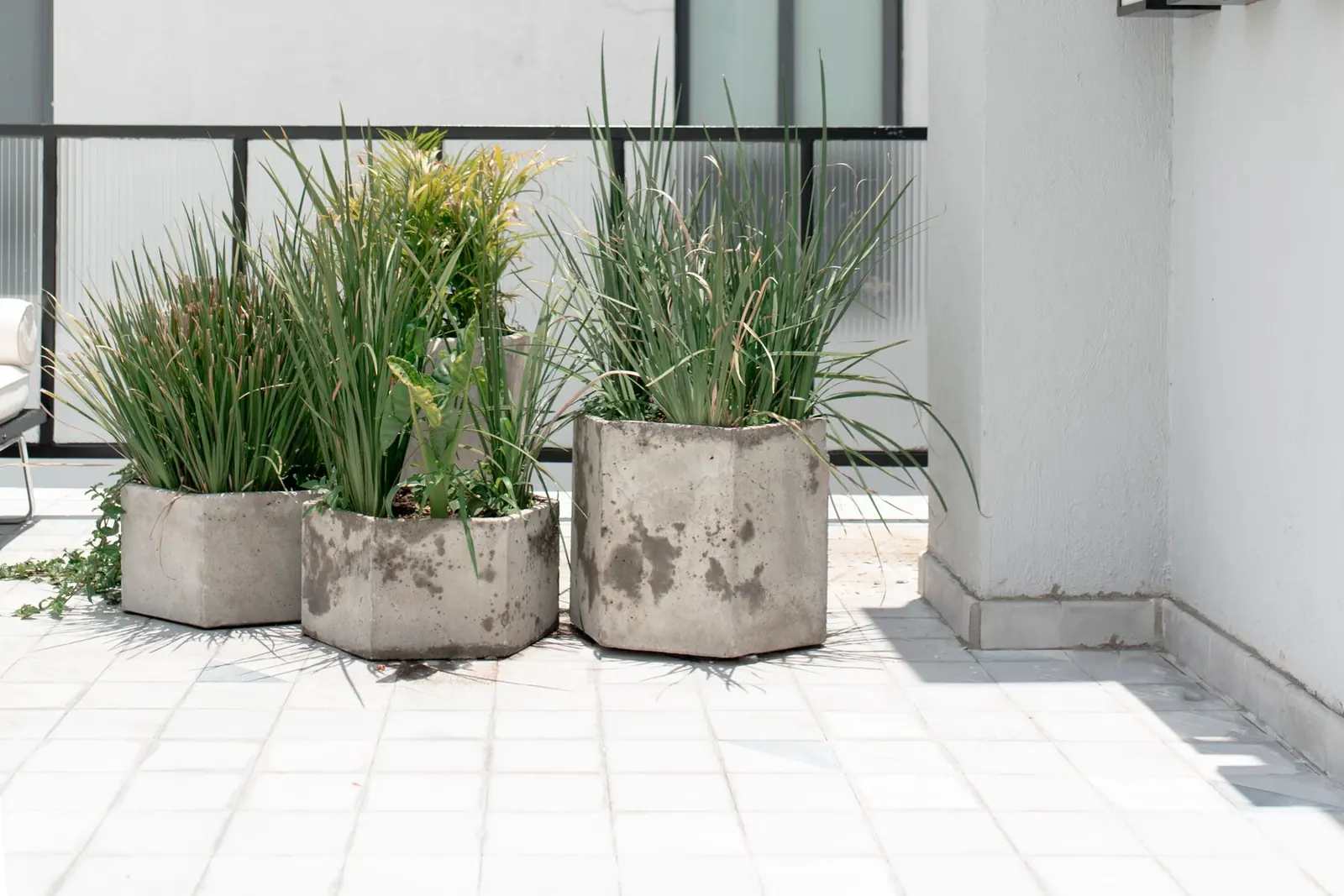
For pots that remain outside, choose a protected location out of the strongest wind. A location beside a building can be useful, but it must not block a doorway, vent, or walkway. Avoid the roof edge where runoff could soak the cover. On a balcony, keep containers inside the railing and respect building rules and load limits.
University of Georgia Extension recommends clustering containers and insulating around the pots when moving them inside is not possible. The root ball has less protection than roots in the ground. A loose wrap around the container sides addresses a different part of the problem than a sheet draped above the leaves.
Use dry burlap or an old blanket around pot sides, without sealing the drainage holes. Group similar-height pots where a single supported cover can span them. Do not stack containers to make them fit. A broad, stable arrangement is easier to cover without snapping stems, and it gives you fewer edges to secure when dusk arrives.
If wind is part of the forecast, handle nearby loose furniture and covers too. Securing outdoor items before high winds belongs in the same evening's work because a loose chair or flapping sheet can undo the plant protection. If a cover cannot be secured without creating a hazard, choose another location or accept the limit.
Build the cover around an air space
Lay out the sheet while it is still light. It should be large enough to span the plants and reach the ground around the group, not simply sit on the canopy like a hat. Ground-reaching coverage helps retain heat released from the surface underneath. A container sitting on an exposed deck still lacks the insulating soil around an in-ground plant.
- Place stable stakes or an existing plant cage around the foliage, avoiding damage to roots.
- Drape a clean, dry sheet over the supports so its weight does not rest on tender stems.
- Bring the edges down around the entire group rather than tying the fabric around plant trunks.
- Weight the bottom edges with stable objects placed on the ground, away from breakable pot rims.
- Check that the fabric will not blow against foliage or into a path, and plan when to remove it.
A cardboard box can cover a small plant if it is tall enough to clear the foliage and can be secured without crushing the pot. It is a poor choice where rain or wind will turn it into a collapsed, soggy load. Check the materials against the actual overnight weather, not just the temperature.
Prefer cloth to a plastic bag pulled over leaves. Plastic can contact foliage and can trap excessive heat when sun returns. A heavy blanket also needs stronger support than a thin sheet, especially if it becomes wet. More weight is not automatically more protection; the structure has to remain upright all night.
Water the root ball if needed, not the leaves into ice
Check the potting mix before the cold arrives. If the plant needs water, water the root zone while conditions allow drainage; do not saturate an already wet pot. The goal is to avoid entering the cold spell drought-stressed, not to turn the container into a reservoir. Empty standing water from ordinary saucers where it would leave the roots waterlogged.
Keep this separate from commercial frost-protection irrigation. Spraying a container with water and allowing it to ice over is not a substitute for a cover or indoor shelter. University of Georgia Extension specifically advises home gardeners against trying to protect plants by coating them with ice. An intermittent garden-hose treatment can create additional damage rather than solve the problem.
Nor does frost preparation call for a last-minute dose of fertilizer. Do not try to force fresh growth as winter approaches. Keep the evening's work narrow: suitable moisture, a protected position, and a cover appropriate to the forecast.
Know when the sheet has reached its limit
Imagine three containers outside a small apartment: a tender herb, a large mixed annual planter, and a dormant perennial. On a calm night with a brief frost risk, bring in the herb and cover the annual planter if preserving it is worthwhile. Give the perennial attention according to its species and season rather than assuming it needs a warm living room.
If the forecast changes to sustained freezing weather, do not keep adding household layers and promising the same result. Relocate valuable tender plants to suitable space, harvest what can be used, or accept the annual display's end. Without a reliable heat source, a cover only slows heat loss; it does not create an unlimited supply of warmth.
A perennial's winter needs are another decision. Iowa State Extension cautions that above-ground containers leave perennial crowns and roots vulnerable through winter. Depending on the plant and site, overwintering may involve planting it, temporarily sinking its pot into soil, or using suitable protected storage. Ask local extension which approach fits before the ground freezes. One successful covered night does not establish a season-long plan.
Uncover in the morning and leave room for recovery
Once temperatures rise above freezing, remove ordinary overnight sheets and boxes so plants receive light and do not overheat. Check the forecast again before returning tender containers to exposed positions. If another cold night is coming, leave the supports ready and dry the fabric before storing or reusing it.
Look for broken stems, a collapsed cover, and blocked drainage before deciding how the plant fared. Cold injury may become clearer later; do not immediately strip a woody plant back simply because leaves look damaged. Record which pots needed moving and where each cover fitted. Next time, a labeled sheet beside the right supports can make the job manageable before darkness, without buying a miniature greenhouse for every pot.
Photo: Brunxs, Pexels License. Cropped and resized for this article.