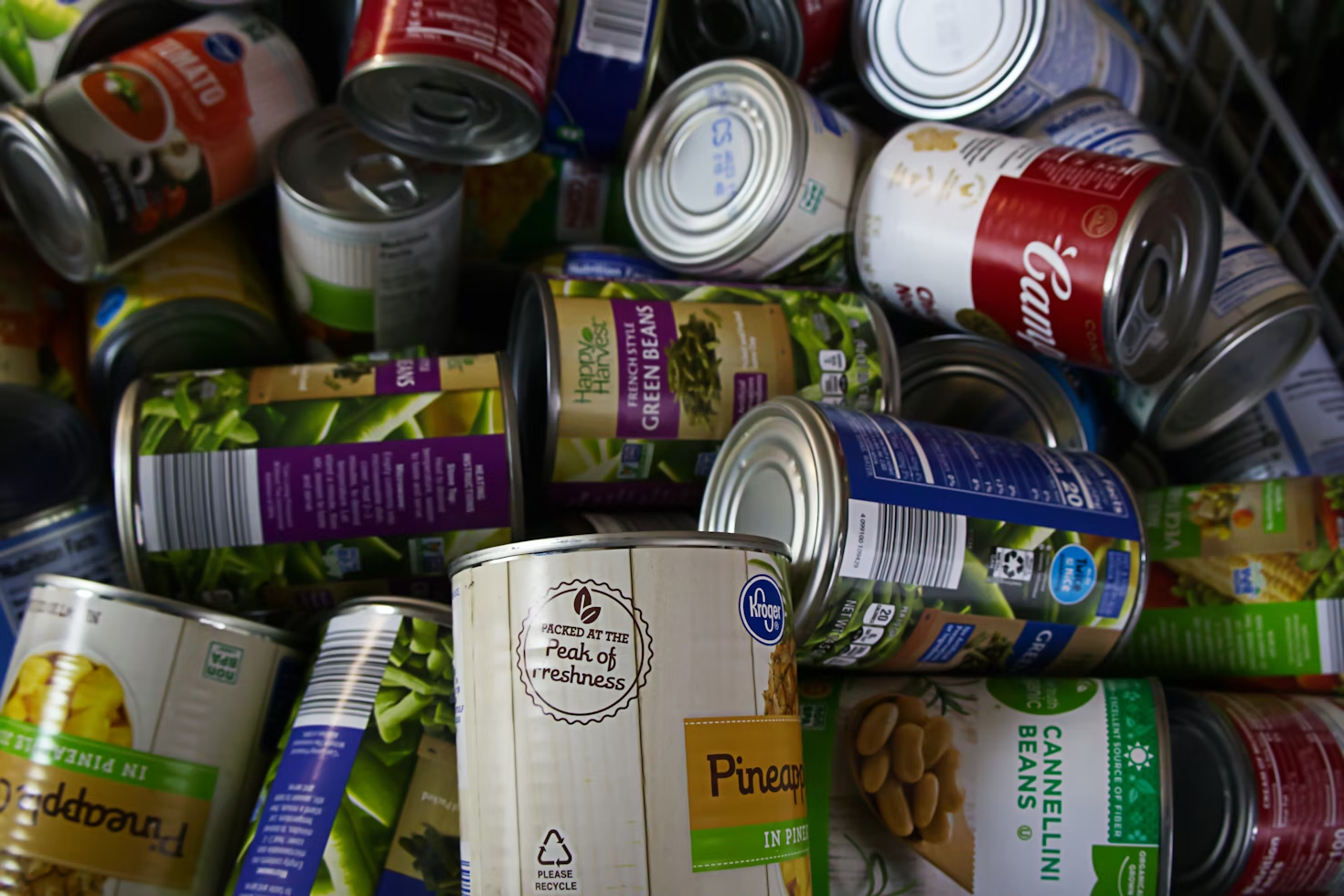
I think a lot of emergency food advice sounds impressive but misses the real point. In an actual emergency, the foods that matter most are not the fanciest, the most expensive, or the most “survival-looking.” The foods that matter are the ones that are safe, shelf-stable, filling, easy to eat, and realistic for your household. Ready.gov says to keep at least a several-day supply of nonperishable food, and its examples are simple: canned foods, dry mixes, staples that do not need refrigeration, and a manual can opener. USDA’s emergency food guidance is similar and includes canned fruits and vegetables, shelf-stable canned meat, peanut butter and jelly, dried fruit, and small packages of crackers.
That is why I think the phrase “actually matter” is so important. In an emergency, food has to do a job. It has to keep people fed when the power is out, when stores are closed, when roads are blocked, or when cooking is limited. It also has to fit real life. If your family hates the food, cannot prepare it, or cannot safely eat it after a power outage, then it is not a good emergency pantry food no matter how long it lasts on paper. FEMA’s emergency guidance says you may already have many good emergency foods in your cupboards, including canned goods, dry mixes, and staples, and it recommends choosing foods your family will eat.
The First Truth: Water Matters More Than Food
Before I even talk about pantry food, I think it is important to say this clearly: water matters first. USDA says people should keep a 3-day supply of commercially bottled water per person, at minimum 3 gallons, for emergencies. Ready.gov’s general kit guidance also includes water right alongside nonperishable food as a basic need.
That matters because some pantry foods can actually make a bad situation worse if you do not have enough water. Dry foods, salty foods, and foods that need extra cooking water may not be the smartest first-line choices during an outage or disaster. I am not saying to avoid dry foods completely. I am saying they should be balanced with foods that are ready to eat, moist enough to be easy to handle, and useful even when utilities are limited. FEMA’s emergency food list reflects that idea by including canned juices, canned fruits and vegetables, canned soups, ready-to-eat cereals, and peanut butter rather than only dry staples.
What Makes a Pantry Food Matter in an Emergency
To me, an emergency pantry food matters when it checks several boxes. It should store well. It should not need refrigeration before opening. It should be easy to eat with little or no cooking. It should provide calories, and ideally some protein, fat, or nutrients. It should be familiar enough that people will actually eat it under stress. Ready.gov specifically recommends foods that do not require refrigeration, cooking, water, or special preparation. USDA’s list also leans toward foods that are easy to use and already common in many homes.
I also think a good emergency pantry includes more than one type of food. A shelf full of only canned soup is not a balanced plan. A shelf full of only rice is not a balanced plan either. The strongest emergency pantry has a mix: protein foods, calorie-dense foods, some fruits or vegetables, simple carbohydrates, and a few comfort foods. FEMA’s emergency list includes canned meats, fruits, vegetables, soups, juices, ready-to-eat cereals, peanut butter, high-energy foods, and foods for infants or people with special diets. That spread makes sense because emergencies do not just challenge hunger. They challenge energy, morale, and routine.
1. Canned Proteins Matter More Than Fancy “Survival Meals”
If I had to choose one category that really matters, it would be canned proteins. Canned tuna, chicken, salmon, beans, chili, and ready-to-eat canned meats are useful because they bring real staying power to a meal. They are filling, widely available, and often edible right out of the container. Ready.gov and FEMA both list ready-to-eat canned meats as strong emergency food choices, and USDA includes shelf-stable cans of meat, poultry, and fish.
I think this matters because hunger is not just about having something in your stomach. People usually do better when they have foods that feel substantial. A protein bar can help, but a can of beans or tuna can anchor an actual meal. In a real emergency, a pantry that has protein options is much stronger than one that only has snack foods.
I would also say canned beans deserve extra respect. They give protein, fiber, and flexibility. They can be eaten alone, mixed with rice, added to soup, or mashed into a simple spread. That is the kind of pantry food that earns its space.
2. Peanut Butter Is One of the Best Emergency Foods
Peanut butter shows up on emergency food lists for a reason. FEMA includes it. USDA includes jars of peanut butter and jelly. FoodSafety.gov’s power-outage chart also notes that peanut butter keeps safely during many outage situations.
I think peanut butter matters because it does several jobs at once. It is calorie-dense, easy to eat, does not require cooking, and works for adults and kids. It can go on crackers, bread, tortillas, apples, or be eaten by itself in small amounts. In a stressful situation, that kind of flexibility is gold.
It is also one of the few emergency foods that feels like both a staple and a comfort food. That may sound small, but it is not. Familiar foods help people stay calmer. FEMA notes that familiar foods are important because they lift morale and give a feeling of security during stress.
3. Canned Fruits and Vegetables Matter More Than People Think
I think people often underrate canned produce in emergencies. Ready.gov, FEMA, and USDA all include canned fruits and vegetables on their recommended lists.
That makes sense to me because canned fruits and vegetables do more than add variety. They can provide fluid, texture, and a break from heavy foods like crackers, bars, and peanut butter. A pantry with only dense, dry foods gets tiring fast. Canned peaches, pears, green beans, corn, carrots, or mixed vegetables make emergency eating feel more normal.
I also think they help with appetite. In stressful situations, not everybody wants to eat something rich or salty. Fruit cups, canned fruit, or mild canned vegetables may go down more easily. That is especially helpful for kids, older adults, or people recovering from illness.
4. Crackers, Cereal, Oats, and Simple Grains Still Matter
Dry staples absolutely belong in an emergency pantry, but I think they matter most when they are the easy ones. Ready.gov includes dry mixes and staples, and FEMA lists ready-to-eat cereals and uncooked instant cereals. USDA mentions small packages of crackers.
To me, the winners in this category are crackers, dry cereal, oats, instant oatmeal, tortillas, shelf-stable bread items, and similar foods that can be eaten with little effort. They pair well with peanut butter, canned meat, jelly, or shelf-stable milk. They stretch the pantry and make it easier to turn individual items into a meal.
I do not put these foods first because many of them are dry and not very satisfying by themselves. But as support foods, they matter a lot. They are the base that helps the other pantry items work better.
5. Shelf-Stable Milk and Nonperishable Drinks Matter for More Than Taste
FEMA includes canned juices, milk, and soup, and USDA’s emergency food suggestions include shelf-stable options as well.
I think shelf-stable milk matters because it supports children, cereal eaters, coffee or tea drinkers, and people who need familiar food routines. It also helps make dry pantry foods easier to use. A box of shelf-stable milk can turn cereal from a last resort into a real breakfast.
I would say the same for juice boxes and other nonperishable drinks, though water still comes first. Emergency food is not only about nutrients. It is also about keeping people functioning with as little disruption as possible. Familiar drinks can help children settle down and make stressful days feel less chaotic.
6. Soup Matters, but Only the Right Kind
Soup always ends up on emergency food lists, and I think that is mostly deserved. FEMA specifically includes canned condensed meat and vegetable soups. Ready.gov mentions canned foods and staples more broadly.
But I think there is an important detail here: the soup has to match the emergency. If the power is out and water is limited, a soup that requires extra water or long heating is less useful than one that is ready to eat. A pull-tab can of hearty soup or stew is much more practical than something that assumes a full kitchen.
That is why I would focus on soups that can be eaten at room temperature if needed. They may taste better warm, but they should still be usable cold. In emergencies, practicality beats perfection.
7. High-Energy Snacks Matter More Than People Admit
Ready.gov and FEMA both include high-energy foods, and FEMA’s examples include things like peanut butter and other calorie-dense choices.
I think these foods matter because emergencies often involve waiting, moving, cleanup, stress, and interrupted sleep. Granola bars, protein bars, trail mix, nuts, dried fruit, and crackers are not complete meal plans, but they are extremely useful. They are fast, portable, and easy to portion out.
I would not build an entire emergency pantry around bars and snacks, but I would definitely include them. They help bridge gaps between meals and are especially useful when people are too tired or overwhelmed to deal with cans and utensils.
8. Foods for Babies, Medical Diets, and Pets Matter the Most for the People Who Need Them
This may be the most overlooked emergency pantry category. Ready.gov says to consider each person’s unique needs, including medication needs, and its food guidance includes baby formula and foods for special diets. FEMA’s lists also include infant food and foods for people on special diets.
To me, that means an emergency pantry is not really complete unless it fits the actual household. A can of tuna does not help a baby. A high-sodium canned meal may not fit someone’s medical needs. A pantry without pet food creates a problem almost immediately for families with animals.
These foods matter because they are not interchangeable. You can usually swap one type of cracker for another. You cannot casually swap infant formula, allergy-safe foods, or pet food. Those items need to be chosen early and checked often.
9. Comfort Foods Matter Too
I think some people dismiss comfort foods because they sound less serious than beans or water. But FEMA’s emergency guidance specifically mentions comfort and stress foods.
That makes sense to me. Emergencies are not just physical events. They are emotional events. A few cookies, hard candy, tea bags, instant coffee, or a favorite shelf-stable snack can help a hard day feel more manageable. I would never make comfort foods the center of an emergency pantry, but I would absolutely make room for them.
A pantry that only keeps people alive is one thing. A pantry that helps people stay calm and cooperative is better.
What Pantry Foods Matter Less Than People Think
I think some foods matter less than people expect in emergencies. Highly perishable refrigerated foods matter less once the power is out, because safety becomes the issue fast. The CDC says a refrigerator keeps food safe for up to 4 hours if the door stays closed, while a full freezer keeps food safe for 48 hours and a half-full freezer for 24 hours. After 4 hours without power, refrigerated perishables like meat, fish, eggs, milk, and leftovers should be thrown out.
That is why I think people should not fool themselves into counting refrigerator food as their emergency pantry. It may buy you a few hours, but it is not the same thing as a stable pantry plan.
I also think foods that require lots of water, lots of fuel, or complicated prep matter less in short emergencies. They can still have a place, but they should not be the only plan.
Safety Matters Just as Much as Stocking Up
A pantry food only matters if it stays safe to eat. CDC says foods may become unsafe after disasters, power outages, and floods, and advises people that if they are unsure whether a food is safe, they should throw it out. It also says never to taste food to test safety.
FoodSafety.gov gives similar power-outage guidance and notes specific foods that should be discarded after unsafe temperature exposure, including raw or cooked meat, opened canned meats and fish, milk, egg dishes, cooked rice, cooked pasta, and leftovers. It also notes that some items, such as peanut butter, jelly, unopened sturdy produce, and certain breads, are safer keepers in comparison.
To me, that changes how I think about emergency food. The strongest pantry is not just full. It is chosen with safety in mind. Shelf-stable foods matter because they reduce the chance that one outage or storm will wipe out your food options.
My Version of a Pantry That Actually Matters
If I were building a no-nonsense emergency pantry, I would start with bottled water, canned proteins, peanut butter, canned fruits and vegetables, crackers, dry cereal or oats, shelf-stable milk, ready-to-eat soup, nuts or bars, and any infant, medical, or pet foods my household needs. That is not glamorous, but it covers the basics well and lines up closely with Ready.gov, FEMA, and USDA guidance.
Then I would add a manual can opener, disposable utensils if needed, and a rotation habit so the food stays current. Ready.gov specifically reminds people to include a manual can opener with canned food supplies.
Final Thoughts
I think the pantry foods that actually matter in an emergency are the boring, dependable ones. They are the foods you can open, trust, eat, and share without needing a perfect setup. They are the foods that keep working when refrigeration fails, when stress is high, and when ordinary routines fall apart. Ready.gov, USDA, FEMA, CDC, and FoodSafety.gov all point in the same direction: keep nonperishable foods that are easy to use, safe to store, realistic for your family, and backed up by enough water.
To me, that is the real lesson. Emergency food is not about fantasy. It is about function. A pantry matters when it helps real people get through a real disruption with less risk and less panic.