When I hear the phrase home safety upgrades, I do not think first about video doorbells, smart speakers, or fancy apps. I think about the things that lower the biggest real risks inside a home: fire, carbon monoxide, falls, electric shock, burns, poisoned air, and furniture tip-overs. The upgrades that matter most are usually not the flashiest ones. They are the ones that work quietly in the background and help protect people when something goes wrong. Sources from NFPA, CPSC, CDC, EPA, and the U.S. Fire Administration all point toward the same idea: start with alarms, safe escape planning, electrical protection, fall prevention, and a few overlooked fixes that can prevent very serious injuries.
Start with smoke alarms, because minutes matter
If I could pick only one safety upgrade for a home, I would start with working smoke alarms in the right places. NFPA says smoke alarms should be installed on every level of the home, inside each bedroom, and outside each sleeping area. They should be mounted high on a wall or on the ceiling, because smoke rises, and alarms near kitchens should be placed far enough away to reduce nuisance alarms. NFPA also notes that wall-mounted alarms should be no more than 12 inches from the ceiling. That is not just small technical advice. It is the kind of detail that helps an alarm do its job when a fire starts.
I think a lot of people assume that “having a smoke alarm” is enough, but it really matters whether the alarm works and whether it is in the right spot. NFPA has also stressed the danger of homes with no alarms or no working alarms. So when I say this upgrade matters, I do not just mean buying one detector and tossing it in a drawer until next weekend. I mean installing them correctly, testing them, and replacing them when they are old or dead. This is one of those upgrades that is simple, affordable, and much more important than people sometimes realize.
Add carbon monoxide alarms where people sleep
The second upgrade I would push near the top of the list is carbon monoxide alarms. Carbon monoxide, or CO, is dangerous because you cannot see or smell it. CPSC calls it a colorless, odorless, poisonous gas, and recommends installing battery-operated CO alarms or CO alarms with battery backup on every level of the home and outside sleeping areas. Interconnected alarms are even better, because when one sounds, they all sound.
This matters most in homes with fuel-burning appliances, fireplaces, attached garages, or backup generators, but really every family should take it seriously. A CO alarm is one of those upgrades that protects people while they are sleeping, which is exactly when they are least able to notice danger on their own. CPSC also says alarms should be installed according to the manufacturer’s instructions and kept out of places where furniture or drapes could block them. That is practical advice, not decoration.
Make a fire escape plan, not just a fire alarm plan
One of the most overlooked home safety upgrades costs almost nothing: a real fire escape plan. The U.S. Fire Administration says families should draw a map of the home, find two ways out of every room, make sure doors and windows are not blocked, choose an outside meeting place, and practice the plan. It also says people should practice their home fire drill at least twice a year.
I think this matters because alarms only warn you. They do not tell you what to do next. In a real emergency, people can panic, freeze, or lose time arguing about which door to use. A practiced plan turns confusion into action. For kids, older adults, and sleepy adults who are jolted awake, that can make a huge difference. I would rather have a house with basic alarms and a practiced plan than a house full of smart devices but no one knows where to go.
Fix electrical trouble before it becomes a fire
Electrical problems are another area where the upgrades that matter are often hidden behind the walls. The U.S. Fire Administration warns against overloading outlets and using extension cords as permanent wiring. Its guidance says major appliances like refrigerators, stoves, washers, and dryers should be plugged directly into wall outlets, and not into extension cords, because cords can overheat and start fires. It also recommends having an electrician install more outlets where they are needed instead of relying on a tangle of temporary cords.
This is why I think one of the smartest home safety upgrades is not glamorous at all: hire a qualified electrician to correct unsafe wiring, overloaded circuits, and badly placed outlets. A house that always needs power strips and extension cords in busy spots is often telling you something. It is saying the electrical setup does not match the way the house is being used. That is not just annoying. It can become dangerous.
GFCIs and AFCIs are not exciting, but they are worth it
Two of the most useful electrical safety upgrades have names that sound technical: GFCIs and AFCIs. GFCIs, or ground-fault circuit interrupters, help protect against electric shock, especially in places where water and electricity might meet. AFCIs, or arc-fault circuit interrupters, are meant to reduce fire hazards caused by dangerous arcing in wiring. CPSC says AFCIs address fire hazards, while GFCIs address shock hazards, and combination devices can include both protections. CPSC also says older homes with ordinary breakers may benefit from added AFCI protection.
I think this is a great example of a safety upgrade that people ignore because it is not visible once installed. But a hidden upgrade can still be powerful. In bathrooms, kitchens, garages, basements, outdoor outlets, and other wet or damp areas, GFCI protection can be a big deal. In older homes, especially, an electrician can help decide whether adding AFCI or combined AFCI/GFCI protection makes sense. These upgrades do not make your house look cooler. They make it safer.
Stop falls by changing the house, not just warning people
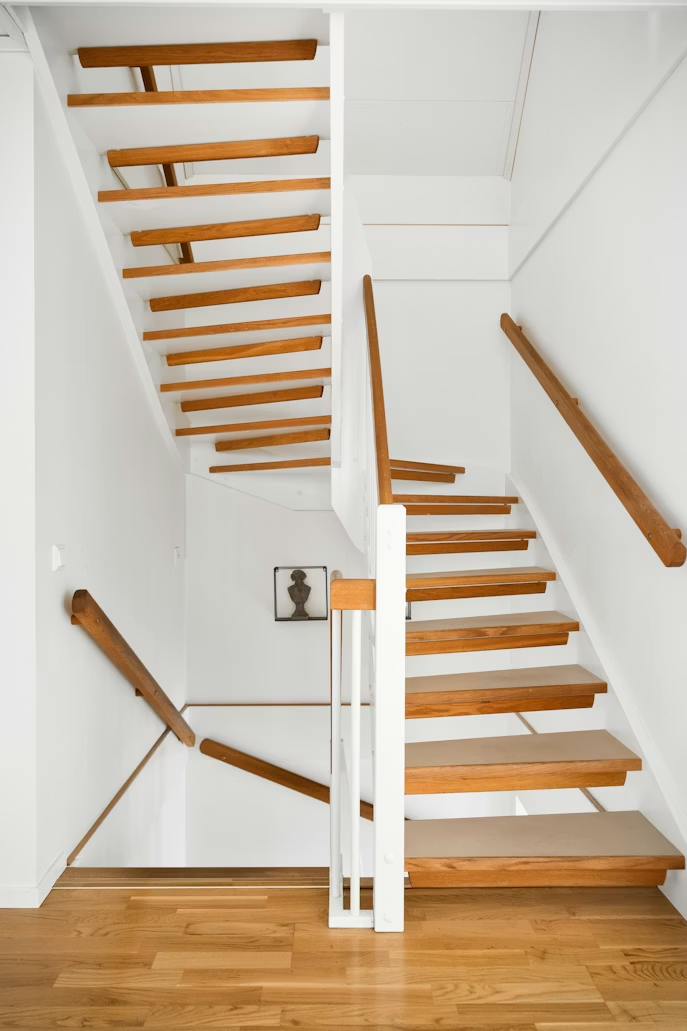
Falls are one of the most common and serious ways people get hurt at home, especially older adults. CDC says falls are a real threat to health and independence, but they can be prevented. Its home fall-prevention checklist points to practical fixes like improving lighting, removing tripping hazards, adding handrails on both sides of stairways, and installing grab bars in bathrooms.
This is one area where I think families sometimes wait too long. They treat grab bars, better lighting, non-slip surfaces, and stair rail improvements as things to think about after someone is already hurt. I think the smarter move is to treat them as standard safety equipment. A dark staircase, a loose rug, or a slippery tub can be a much bigger everyday danger than a stranger at the front door. A lot of safety is just making it easier for people to move through the house without falling.
Bathrooms need more attention than they usually get
If I were ranking rooms by injury risk, bathrooms would be near the top. They combine hard surfaces, wet floors, hot water, and small spaces. CDC’s fall-prevention guidance supports upgrades like grab bars and better lighting, and CPSC urges households to lower water heater temperature to 120 degrees Fahrenheit to help prevent tap-water scalds. CPSC notes that young children and older adults are especially at risk from hot-water burns.
That is why I think a bathroom safety package actually matters: grab bars near toilets and tubs, non-slip bath surfaces, brighter lighting, and a safer hot-water setting. These are not luxury remodel ideas. They are injury-prevention steps. Lowering the water heater temperature can also save energy, which is a nice extra benefit, but the safety reason is the main point here.
Anchor furniture and TVs, especially if kids live there
One home hazard that does not get enough attention is furniture and TV tip-overs. CPSC’s Anchor It campaign says tip-overs can kill and seriously injure children, and recommends securing furniture and TVs to the wall with anti-tip devices. CPSC also says freestanding ranges and stoves should be installed with anti-tip brackets to prevent scalding and crushing injuries.
I think this upgrade matters because the danger can seem invisible until the moment it happens. A dresser looks stable until a child climbs a drawer. A TV stand looks fine until a toddler pulls on it. Anchoring is usually quick, and it protects against a type of accident that can be sudden and devastating. This is one of those fixes that feels small right up until you imagine the alternative.
Test for radon, because some serious risks are invisible
Another upgrade that actually matters is not a device at all. It is testing for radon and fixing the problem if levels are high. EPA says radon is a naturally occurring radioactive gas that can cause lung cancer, and that you cannot see or smell it. EPA also says all homes should be tested for radon and that testing is the only way to know your level of exposure.
I like including radon in this conversation because it reminds me that home safety is not only about dramatic emergencies like fires. It is also about the steady, hidden hazards people can live with for years without realizing it. A radon test kit is a practical step. It may not feel as urgent as a smoke alarm, but it still belongs on the shortlist of safety actions that matter.
Generators and backup power need safety rules too
A lot of families now think about backup power after storms and outages, but backup power can create its own danger if it is used carelessly. CPSC says portable generators should never be used inside homes or garages, even if doors or windows are open, and should be operated outside at least 20 feet from the home with exhaust pointed away. That guidance connects directly to carbon monoxide risk.
So if a family adds a generator, I would count the full upgrade as more than just buying the machine. The real safety upgrade includes CO alarms, a safe operating location, and clear household rules about generator use. A dangerous backup plan is not really a backup plan.
The best upgrades are the ones that protect everyday life
What I keep noticing is that the best safety upgrades are not usually the ones sold as exciting home-tech features. They are the ones tied to common, serious harms. Working smoke alarms. Carbon monoxide alarms. Safe wiring. GFCI and AFCI protection. Grab bars and railings. Anchored furniture. Safer hot-water settings. Radon testing. Escape plans. These steps help with the problems that actually send people to the hospital or worse.
That does not mean every family has to do everything at once. I think the smart way is to work from high impact to low impact. First, make sure the house can warn you about fire and carbon monoxide. Next, make sure people can get out. Then reduce electrical risks, fall risks, and injury risks in places like bathrooms, kitchens, and children’s rooms. After that, test for hidden problems like radon.
My practical order of upgrades
If I were helping a normal family decide where to start, I would do it in this order. First, install and test smoke alarms and CO alarms in the right places. Second, make and practice a home fire escape plan. Third, deal with obvious electrical hazards like overloaded outlets and permanent extension-cord use. Fourth, ask an electrician about GFCI and AFCI protection, especially in older homes. Fifth, prevent falls with handrails, grab bars, better lighting, and less clutter. Sixth, anchor furniture and TVs if children visit or live there. Seventh, lower the water heater to 120 degrees Fahrenheit and think about anti-scald habits. Eighth, test for radon. Every item on that list is supported by safety guidance from major public agencies or fire-safety organizations.
To me, the biggest lesson is simple: real home safety is usually boring on purpose. It is the kind of boring that keeps people alive. It is not about making a house look futuristic. It is about making the house more forgiving when humans are distracted, tired, rushed, curious, clumsy, old, young, or unlucky. That is why these upgrades actually matter. They protect real life as it is, not as we wish it always was.