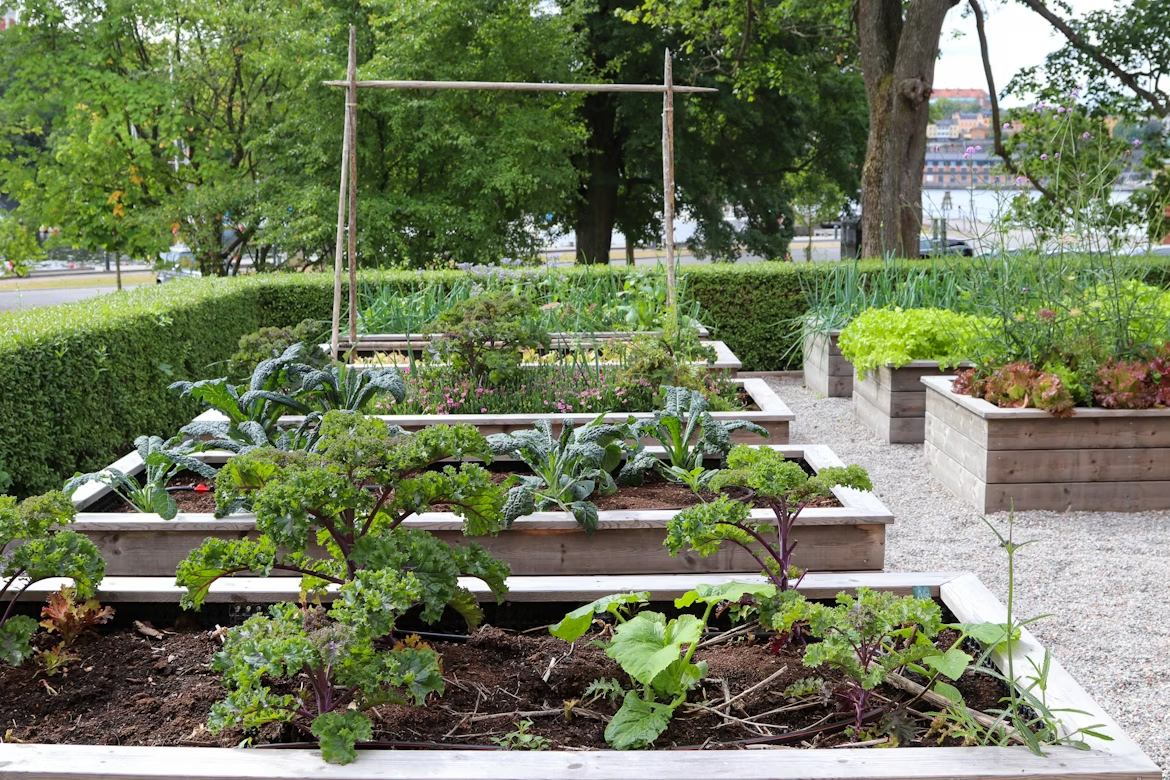
By me, for people who want a garden that feeds them, not just a garden that looks nice in photos.
When I hear the phrase survival gardening, I do not think about panic. I think about a smart, useful food garden that helps a family eat better, spend less, and become a little more prepared. For beginners, that matters a lot. A survival garden is not really about trying to grow every single calorie you need right away. It is about learning how to reliably grow foods that are easy to plant, useful in the kitchen, and worth the time and space. The USDA’s National Agricultural Library says the basics of vegetable gardening can be broken into a few simple steps: planning, site selection, soil preparation, planting, maintenance, and harvesting. That is a good sign for beginners, because it means this is something ordinary people can learn step by step.
Start smaller than your imagination
One of the biggest beginner mistakes is planting a huge garden on day one. I understand the urge. A person gets excited, buys a pile of seeds, and imagines rows and rows of food. Then weeds arrive, watering takes forever, pests show up, and the garden becomes a stressful chore instead of a help. Extension guides for home vegetable gardens repeatedly recommend starting small and growing bigger later as your skills improve. The University of Delaware’s guidance says a small garden is best for beginners, and Clemson’s planning guide also emphasizes strategic planning instead of overplanting.
That advice makes sense to me because a survival garden has to be dependable. A small garden that I can actually weed, water, and harvest is more useful than a giant one that fails because I got overwhelmed. For beginners, a few well-managed beds are better than an ambitious half-acre of regret. Survival gardening is really about reliability. I would rather produce some beans, greens, radishes, and squash every year than dream about feeding my whole neighborhood and end up with nothing but weeds.
Pick the sunniest spot you have
A food garden cannot do much without light. Multiple extension sources say most vegetables need about 6 to 8 hours of sun, and crops that make fruits or seeds, like tomatoes, peppers, squash, and cucumbers, usually need even more. Virginia Cooperative Extension says fruit and seed crops generally need at least 8 hours of direct sun, while leafy crops and some root crops need at least 6 hours. Michigan State and the USDA also point beginners toward sunny garden spots near a water source.
That means I should not choose a garden site just because it looks cute or happens to be empty. I should choose the place that gives my plants the best chance to grow food. If my yard has only partial sun, that does not mean I should give up. It means I should match my crops to the light I really have. Leafy greens and some root crops can handle less sun than tomatoes or peppers. That is one reason beginner survival gardens often do better when they focus first on practical crops instead of the most demanding ones.
Good soil matters more than fancy gear
I think beginners often get distracted by tools, raised bed kits, and expensive garden gadgets. But the real star of a survival garden is the soil. Kentucky and West Virginia extension guidance both recommend starting with a soil test so gardeners know what their soil needs before adding amendments. Oregon State also points out that soil testing labs can check important things like pH and nutrients, which gives gardeners a much clearer picture than guessing.
This matters because healthy soil grows stronger plants, and stronger plants usually handle stress better. If I want a survival garden, I need roots that can grow deep, hold moisture, and access nutrients. That is why so many guides recommend adding organic matter like compost and loosening compacted soil before planting. North Carolina State notes that raised beds often need fresh organic material added after each season, and North Carolina and Delaware both point beginners toward soil improvement as one of the foundations of success.
Grow what you will actually eat and what beginners can actually manage
The phrase “survival garden” can make people think they need to grow only the biggest, heaviest, most calorie-packed crops. I think that is too narrow, especially for beginners. A useful garden should include foods that are easy to grow, easy to harvest, and easy to use in regular meals. Nebraska Extension lists carrots, radishes, beans, peas, and salad greens among the easiest vegetables to grow. West Virginia Extension similarly recommends crops like beets, carrots, cucumbers, beans, lettuce, peas, radishes, squash, and turnips for direct sowing.
For me, that suggests a very practical beginner list. Beans matter because they are productive and easy. Lettuce and salad greens matter because they grow fast. Radishes matter because they teach patience on a short timeline. Squash matters because it can produce a lot from one plant. Potatoes, onions, winter squash, and dry beans also make sense over time because some of them store better than tender vegetables. Minnesota and Utah storage guidance shows that onions and winter squash can keep for extended periods in cool, dry conditions, which makes them especially useful in a survival-minded garden.
Think in layers: quick crops, steady crops, and storage crops
A smart beginner survival garden does not plant everything for the same purpose. I like thinking about it in three groups. First are quick crops, like radishes and leaf lettuce, that give a fast win and early food. Oregon State notes that early vegetables such as spinach, radishes, leaf lettuce, and peas can be followed by later plantings. Second are steady crops, like beans, zucchini, and tomatoes, that feed you over a long stretch of the season. Third are storage crops, like onions, winter squash, potatoes, and maybe dry beans, that can last after harvest if stored correctly.
This layered approach matters because survival gardening is not just about the biggest harvest day. It is about having food over time. A garden that gives me something in a month, something all summer, and something I can still eat later in the season is much more useful than a garden that peaks once and is done. That is also better for morale. Beginners need early wins. A few fast crops can keep a new gardener motivated while the longer-season crops are still growing.
Watering is where many beginner gardens succeed or fail
A lot of gardening problems are really watering problems in disguise. University of Minnesota guidance says the vegetable garden needs about one inch of rain per week, and Clemson gives a similar rule of thumb for summer. Michigan State adds a useful reminder that weather matters a lot and that checking the soil with your finger is often one of the simplest ways to decide whether it is dry.
That tells me something important: survival gardening is not only about seeds. It is about systems. If I plant a big garden but cannot keep it watered, I do not really have a plan. That is one reason so many beginner guides suggest putting the garden near the house and near a water source. Hauling water across a property sounds manageable in imagination, but it gets old fast in real life. A garden that is close by is easier to notice, easier to maintain, and less likely to be forgotten during hot weather.
Mulch is one of the simplest upgrades that actually helps
If I had to pick one low-cost trick that beginners underrate, I would pick mulch. Iowa State says mulch can control annual weeds, conserve soil moisture, moderate soil temperatures, reduce erosion, and help keep produce cleaner. South Dakota State also notes that organic mulches can improve water retention and help suppress weeds.
That is a big deal in a survival garden because weeds steal time, water, and nutrients. A beginner who mulches around plants is often buying some breathing room. Clemson does caution against overmulching and says the layer should generally stay to about 3 inches so roots still get oxygen. I like that detail because it shows the real pattern of gardening: even good ideas work best when used thoughtfully, not dumped on in huge amounts.
Seeds or transplants? Use both, but be smart about it
Some beginners think they must start everything from seed to be “real” gardeners. I do not think that helps. West Virginia Extension points out that some crops do well when seeded directly into the garden, including beets, carrots, cucumbers, beans, lettuce, peas, radishes, squash, and turnips. It also notes that crops like broccoli, cabbage, eggplant, peppers, tomatoes, and many herbs are often grown from transplants.
That means a smart beginner can mix methods. I can direct-sow easy crops and buy healthy transplants for slower or fussier ones. This is not cheating. It is strategy. Survival gardening for beginners should be about producing food, not proving purity. If a tomato transplant gets me to harvest more reliably than my shaky indoor seed-starting setup, then the transplant is the better beginner move.
Learn your planting calendar, because timing changes everything
One thing that surprises beginners is how much success depends on timing. Georgia Extension’s 2025 vegetable planning advice stresses using regional planting charts and choosing varieties recommended for local conditions. Virginia Tech’s 2025 home garden planting guide also points gardeners to planning and planting resources based on local growing conditions.
This is important because “plant in spring” is not enough information. Spring is different in Maine, Georgia, Colorado, and Oregon. Some crops want cool weather. Others hate cold soil. A survival garden becomes more dependable when I stop treating planting like a random weekend activity and start treating it like a calendar-based system. My local Cooperative Extension office is one of the best places to find that calendar. The USDA’s gardening page even points readers to Extension agents for vegetable gardening help.
Rotate crops so your garden does not get weaker every year
This is one of those habits that sounds advanced but is actually very beginner-friendly once you understand it. USDA says crop rotation can be used in small food gardens, and for the best effect, vegetables from the same plant family should not be planted in the same area more than once every three to four years. Penn State’s 2025 guidance also says rotation helps prevent pests, diseases, and nutrient depletion.
I think of crop rotation as giving the garden a memory. If I plant tomatoes in the same place every year, I am giving tomato problems a familiar address. If I move plant families around, I make life harder for pests and diseases and easier for the soil. Even in a small garden, a simple rotation plan is better than no plan at all. This is the kind of quiet habit that helps a survival garden stay productive for more than one season.
Harvesting and storage are part of the garden, not an afterthought
A garden only helps feed you if you know what to do after the food is picked. University of Minnesota guidance on harvesting and storing home garden vegetables explains that different crops have very different storage lives and needs. For example, winter squash should be harvested when the shells are hard and can store in cool, dry conditions for months, while tender crops often need to be eaten or preserved much sooner. Wisconsin Extension also offers storage guidance for many home garden crops.
This is why I think beginner survival gardeners should not plant only what is fun to grow. They should also plant some things that keep. A giant pile of cucumbers all at once can become a problem if I am not ready for them. Onions, winter squash, potatoes, and dry beans often fit survival goals better because they are more useful after harvest. The garden is not finished when food comes out of the ground. It is finished when that food is either eaten, stored, or preserved safely.
Preserve food safely, because unsafe food is not a backup plan
This part matters a lot. A survival garden often leads people toward canning, drying, freezing, fermenting, or pickling. That can be excellent, but only if it is done safely. The National Center for Home Food Preservation says it is a source for current research-based recommendations on food preservation, and the CDC warns that improperly home-canned foods can cause botulism. The CDC specifically points people to the USDA Complete Guide to Home Canning and the National Center for Home Food Preservation for safe methods.
I think beginners should hear this clearly: do not invent your own canning rules. Do not trust random online shortcuts just because they sound confident. Use tested recipes and tested methods. Freezing and drying can be simpler ways to begin, but even then, it helps to lean on trusted guidance. A survival garden is supposed to make life more secure. Unsafe preservation does the opposite.
What I would plant first in a beginner survival garden
If I were starting from scratch, I would build a beginner garden around usefulness and success. I would plant leaf lettuce or other greens for fast harvests, radishes for quick wins, bush beans for steady production, zucchini or summer squash for volume, a few tomato plants for everyday cooking, and one or two storage-minded crops like onions or winter squash. That mix gives speed, variety, and some longer-term value. It also lines up well with extension guidance on easy crops for beginners and crops that store reasonably well.
I would not begin by trying to master every crop that looks good in a seed catalog. I would rather learn a handful well. Survival gardening gets more powerful when I repeat what works, take notes, and improve season by season. A garden notebook can matter almost as much as a shovel. It helps me remember planting dates, pest problems, weather patterns, and which varieties were actually worth growing. That kind of record-keeping turns a hopeful beginner into a capable gardener. This point is an inference from the planning-heavy guidance across USDA and extension sources: gardens improve when they are treated like systems, not guesses.
The real goal is not perfection. It is resilience.
The biggest lesson I take from beginner survival gardening is that it should feel steady, not dramatic. I do not need a movie-version homestead to make this worthwhile. I need a garden that fits my space, my climate, my time, and my skill level. I need sun, decent soil, dependable water, crops I will actually eat, and safe ways to store or preserve the harvest. When I look at the advice from USDA, Cooperative Extension programs, and food-preservation experts, the message is simple: start small, match the garden to real conditions, and build skill over time.
That is why I think survival gardening is a great beginner project. It teaches patience, observation, planning, and responsibility. It also gives something wonderful in return: food. Maybe not all your food at first. Maybe not even most of it. But enough to matter. Enough to learn from. Enough to make the next season smarter than the last one. And for a beginner, that is exactly where a real survival garden begins.