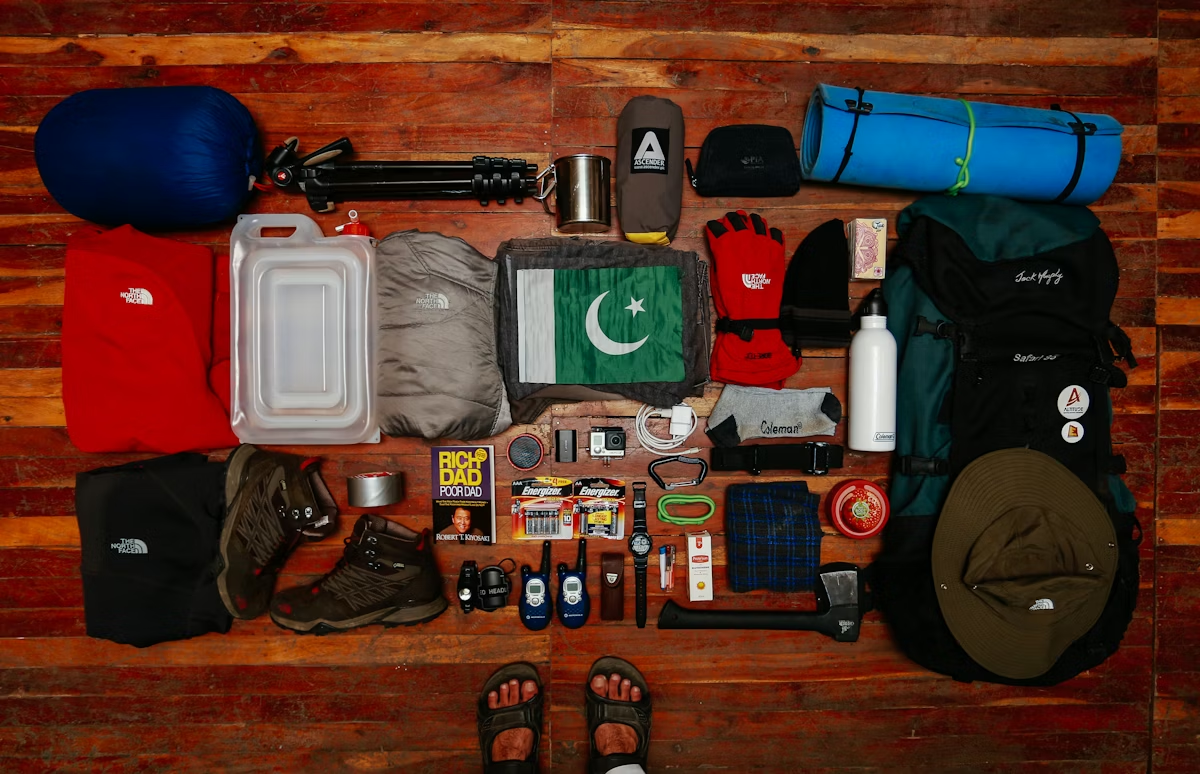
By me, for people who want to be prepared without turning their closet into a movie prop department.
When I hear the phrase survival gear, I think a lot of beginners picture giant knives, expensive backpacks, and dramatic end-of-the-world scenes. I do not think that is the smartest place to begin. For a beginner, the best survival gear is usually the gear that helps with the most common real-life problems: power outages, storms, bad weather, unsafe water, minor injuries, evacuations, and the possibility of being stuck at home for a few days. Ready.gov, the American Red Cross, CDC, and EPA all point beginners toward the same basic idea: start with water, food, light, communication, first aid, medicine, sanitation, and a plan.
That matters because beginners can waste a lot of money on gear that looks impressive but does not solve everyday emergencies. A giant survival kit is not useful if it does not include enough water, a working flashlight, needed medications, or a way to get information when the power is out. The Red Cross says a basic kit should include water, non-perishable food, a flashlight, a battery-powered or hand-crank radio, extra batteries, a first aid kit, medications, sanitation items, and copies of important documents. Ready.gov says your kit should help you survive on your own for several days.
Start with the boring gear, because boring gear saves people
If I were helping a beginner build a survival kit, I would start with the least exciting items first. Water comes before gadgets. Food comes before “tactical” anything. A flashlight comes before a giant tool that can do seventeen things badly. CDC says people should store at least 1 gallon of water per person per day for 3 days, and try to store a 2-week supply if possible. The Red Cross gives the same basic number and notes that people may need more in hot climates or for pets, illness, or pregnancy.
That tells me the first real beginner survival gear is not even glamorous. It is water containers, stored water, and a practical way to keep that water organized. The next step is food that does not require refrigeration and is easy to prepare. The Red Cross recommends non-perishable, easy-to-prepare food for at least 3 days if evacuating and ideally 2 weeks at home. That means shelf-stable food you will actually eat is better than novelty survival rations you hate.
A flashlight beats fear every time
One of the simplest and best beginner gear choices is a dependable flashlight. This sounds obvious, but in a real outage, light changes everything. It helps people move safely, check the house, find supplies, and avoid panic. Ready.gov and the Red Cross both list flashlights as basic emergency gear.
I think this is where beginners should remember an important rule: simple gear that works is better than complicated gear that is annoying. A flashlight should be easy to find, easy to turn on, and powered by batteries you actually keep in the house. Extra batteries matter too, because a flashlight with dead batteries is just clutter. That is why the Red Cross checklist includes both the flashlight and extra batteries, not just the flashlight alone.
A weather radio is one of the smartest beginner tools
A lot of beginners forget that information is survival gear too. During storms or outages, phones may lose charge, internet service may fail, and cell networks may get overloaded. That is why the Red Cross recommends a battery-powered or hand-crank radio, preferably a NOAA Weather Radio. NOAA weather broadcasts and alerts can help people know whether to shelter, evacuate, or prepare for dangerous weather.
To me, this is one of the most underrated beginner purchases. A weather radio is not flashy, but it does something very important: it tells me what is happening outside my house when normal communication gets shaky. That can matter during hurricanes, tornadoes, blizzards, floods, and other weather emergencies. A radio also fits the beginner rule perfectly. It is useful, practical, and tied to a real need.
First aid gear matters, but only if it is realistic
Another top beginner item is a real first aid kit. I do not mean a tiny plastic box with three bandages and a sad wipe. I mean a kit that can actually handle cuts, scrapes, and common minor injuries, plus any personal medical needs in the household. The Red Cross says first aid kits should include personal items like medications and emergency phone numbers, and the kit should be checked regularly so expired or used items can be replaced.
This is important because beginners sometimes buy gear for rare dramatic emergencies while ignoring the most likely problem, which is usually a normal injury. A useful first aid kit should match the people in the home. That might mean allergy medicine, prescription medicine, extra glasses, or supplies for a child, older adult, or pet. The Red Cross says medication and medical items belong in emergency kits, and it specifically recommends a 7-day supply of medications.
A multi-purpose tool is useful, but it is not the star
A lot of beginner gear guides act like the whole survival world starts with a multi-tool. I think that is backwards. A multi-purpose tool is helpful, and the Red Cross includes one on its checklist, but it is not more important than water, medicine, light, or communication.
That said, I do think a simple multi-tool or sturdy pocket tool can earn a place in a beginner kit. It can help open packaging, tighten loose gear, cut cord, and handle small practical tasks. The beginner mistake is treating it like magic. It is a helper, not a hero. The best beginner mindset is to build a kit where every item has a clear job, not to collect objects because they look cool on social media. This is an inference from the official kit checklists, which consistently prioritize core supplies before extra tools.
Water treatment gear is smarter than trusting luck
Stored water should come first, but beginners also benefit from understanding how to make water safer in an emergency. CDC says unsafe tap water can become a problem during emergencies, and EPA says bottled water is best when available. If it is not, EPA recommends boiling water. Its guidance says to bring water to a rolling boil for at least one minute, or three minutes above 5,000 feet.
For me, that means one of the best beginner upgrades is not just “own a water filter” in a vague sense. It is learning a safe backup method and keeping basic supplies ready. Water purification is not exciting until it is suddenly the most important thing in the house. A beginner does not need to become a wilderness expert on day one, but a beginner should understand that clean water is survival gear in the most literal sense.
Sanitation gear deserves more respect
Sanitation is one of the least glamorous parts of preparedness, which is probably why people skip it. But the Red Cross includes sanitation and personal hygiene items on its survival kit list for a reason. In a short emergency, staying clean and handling waste properly can help prevent illness, stress, and a lot of miserable household chaos.
I think beginners should take this seriously because a survival kit is not just about dramatic rescues. It is also about getting through several uncomfortable days without turning the house into a health problem. Soap, wipes, trash bags, toilet paper, feminine hygiene items, diapers if needed, and basic cleaning supplies may not look impressive in a gear photo, but they matter in real life. This is strongly supported by the official emergency kit lists, which include hygiene and sanitation alongside food and light.
Fire safety gear belongs in the beginner category
I also think a beginner survival setup should include a home fire extinguisher. NFPA says that for home use, people should choose a multi-purpose extinguisher that can handle small home fires and is large enough to do the job without being too heavy to use. NFPA also makes an important point: extinguishers are for small fires, not big ones.
That matters because beginners sometimes think “survival gear” only means gear for outside disasters. But some of the most likely emergencies begin right in the kitchen, garage, or laundry area. A fire extinguisher is not the first thing I would buy before water and light, but it is absolutely in the serious beginner tier. It is practical, it addresses a common emergency, and it can buy precious seconds in the right situation.
Bags matter, but not in the way people think
Many beginners get obsessed with the perfect survival backpack. I understand that, because bags are fun to shop for. But I think the better beginner question is not “What is the coolest bag?” It is “Can I carry my supplies easily if I have to leave?” Ready.gov says emergency kits can be stored in one or two easy-to-carry containers such as plastic bins or a duffel bag.
That means the best beginner bag is usually the one that is sturdy, easy to grab, and big enough for the basics without becoming a back-breaking mistake. A simple backpack or duffel often works fine. I would rather see a beginner with a plain bag full of useful items than a fancy “survival” pack full of nonsense. The container matters, but the contents matter more.
Documents and medications are survival gear too
This is one of the easiest beginner mistakes to fix. People remember flashlights and canned food, but they forget spare prescriptions, ID copies, insurance information, medical details, and emergency contact numbers. The Red Cross says emergency kits should include copies of personal documents and a 7-day supply of medications. Ready.gov also encourages families to make a communication plan, not just gather supplies.
To me, that makes documents and meds some of the most important “invisible gear” in the whole kit. In an evacuation, having copies of key papers and the medicine people actually need can matter more than half the gadgets sold as survival tools. This is especially true for children, older adults, and anyone who depends on daily medication or medical devices.
Do not forget pets
A beginner kit is not complete if the household has pets and the plan ignores them. Ready.gov says families should prepare pets for disasters and build a pet emergency kit. USDA also recommends food, water, bowls, medications, veterinary records, carriers or leashes, and current photos in case a pet gets lost.
I like this reminder because it keeps preparedness honest. A family is not truly ready if the humans are packed and the pets are an afterthought. Pet supplies are not “extra.” They are part of the real survival plan for the household you actually have.
The best beginner gear list is shorter than people think
If I were building a beginner kit from scratch, I would keep the core list simple. I would start with stored water, non-perishable food, a flashlight, extra batteries, a battery-powered or hand-crank NOAA weather radio, a real first aid kit, needed medications, sanitation supplies, copies of important documents, a basic multi-tool, and a home fire extinguisher. That list matches the strongest themes in guidance from Ready.gov, Red Cross, CDC, EPA, and NFPA.
That is enough for a beginner to do something meaningful right away. It is not a movie set. It is not a bunker catalog. It is a realistic emergency foundation. Once that foundation exists, a person can improve it over time based on climate, risks, household size, and budget. Ready.gov even has low- and no-cost preparedness guidance that encourages building a kit over time with items people may already have.
Skills are more important than owning random stuff
The biggest lesson I take from all of this is that the best survival gear is the gear you understand and maintain. A flashlight is only useful if you know where it is. A radio is only useful if it works. A first aid kit is only useful if it is stocked. Water is only useful if it is stored safely. A fire extinguisher is only useful if it is the right kind for a small fire and the person using it knows when to stop and escape.
So for beginners, I would not chase the biggest collection. I would build the most dependable small kit possible. I would label things, check expiration dates, rotate food and water, replace batteries, and practice the family emergency plan. Ready.gov’s planning tools and the Red Cross kit guidance both support that approach: preparedness is a system, not a shopping spree.
A lot of survival marketing tries to sell fear. I think the better beginner goal is confidence. Real beginner gear should make me calmer, not more dramatic. It should help me handle ordinary emergencies well. And that is why the best survival gear for beginners is usually the plain, reliable, practical stuff that quietly works when life gets loud.