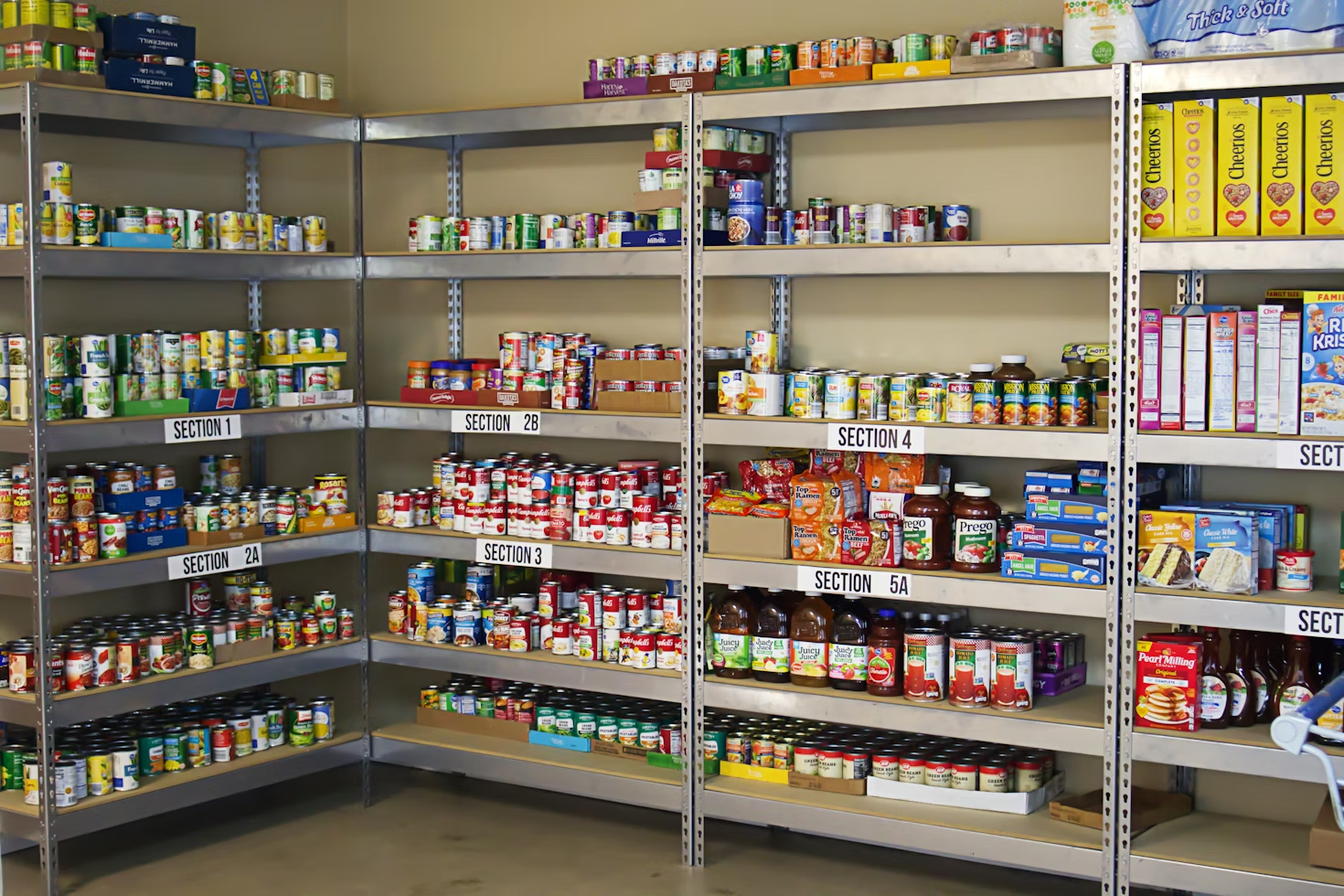
When I think about emergency preparedness, I do not picture a giant bunker or a room full of expensive gear. I picture one simple shelf in a home. That shelf can hold the things a family may need if the power goes out, a storm hits, roads close, or stores run low on supplies for a few days. A simple emergency supply shelf is not about fear. It is about being calm, organized, and ready.
I like this idea because it makes preparedness feel possible. Many people hear the words “emergency kit” and imagine a huge shopping trip with a huge price tag. But a supply shelf can begin with just a few items: water, shelf-stable food, a flashlight, batteries, a first aid kit, and important personal supplies. Official emergency guidance from Ready.gov says a basic kit should include water, food, a flashlight, a battery-powered or hand-crank radio, extra batteries, first aid supplies, and other essentials. Ready.gov also says people should store at least one gallon of water per person per day for several days.
What I like most about an emergency supply shelf is that it turns a confusing problem into a simple habit. Instead of wondering, “What would I do in a disaster?” I can look at one place in the house and know I have already started the answer. In this article, I will explain how to build a simple emergency supply shelf, what to place on it, how to organize it, and how to keep it updated without spending too much money.
Why an emergency supply shelf matters
I think an emergency supply shelf matters because emergencies are often ordinary at first. A bad storm may knock out electricity. A water main may break. A hurricane warning may send crowds rushing into stores. A winter storm may make roads unsafe. In moments like these, families do not always need fancy equipment. They need the basics close by.
That is why official preparedness groups focus on core supplies. Ready.gov recommends a basic disaster supply kit with water, nonperishable food, flashlights, batteries, a first aid kit, sanitation items, and tools for communication. The American Red Cross also recommends building supplies for both staying home and evacuating, including water, easy-to-prepare food, a flashlight, a radio, extra batteries, medications, and hygiene items.
To me, the shelf itself is important because it creates a home base. If supplies are scattered in a closet, in a kitchen drawer, and under a sink, people may waste time looking for them. A shelf keeps emergency items visible and easier to check. It also helps families notice what is missing. When I can see only one flashlight instead of two, or one case of water instead of enough for everyone, I know what to add next.
Start with the right place
I would build my emergency supply shelf in a cool, dry, easy-to-reach spot. That detail matters more than it may seem. Food and medicine can be damaged by heat or moisture, and in an emergency, no one wants to dig through a wet basement corner or climb dangerously to reach a top shelf.
The best location is usually somewhere inside the home that is safe, not cluttered, and simple to access. A pantry area, laundry room shelf, hall closet shelf, or sturdy garage shelf can work if the temperature stays reasonable and items stay dry. The CDC advises keeping canned or packaged food in a cool, dry place and storing boxed food in tightly closed containers. It also recommends checking expiration dates at least twice a year and replacing stored water every six months.
If I were choosing the exact spot, I would ask a few basic questions. Can everyone in the house reach it? Is it away from leaking pipes or flood-prone corners? Is it far enough from cleaning chemicals and other unsafe products? Can I grab things quickly in the dark? A simple emergency shelf should make life easier, not harder.
Build around the most important item: water
If I had to choose the first thing to place on the shelf, I would choose water. People can manage without many comforts for a short time, but clean water is essential. Ready.gov says to store at least one gallon of water per person per day for several days for drinking and sanitation. The same guidance appears in its basic kit recommendations.
That number surprises some people. One gallon per person per day adds up quickly. For a family of four, that means four gallons for one day, twelve gallons for three days, and more if they want a larger home supply. The Red Cross recommends one gallon per person per day as well, with a three-day supply for evacuation and a two-week supply for home if possible.
Because water can be heavy, I would not try to stack everything on one weak shelf. I would either place water on the bottom shelf or store some of it directly below the shelf in sturdy containers. Heavier items should stay low for safety. I would also label the water with the date I stored it so I know when to replace it.
This is one reason I think a simple shelf works so well. It reminds me that preparedness is not only about collecting objects. It is about thinking ahead. If I build the shelf carefully, even the placement of the water becomes part of the plan.
Add shelf-stable food your family will actually eat
After water, I would add nonperishable food that is easy to store, easy to prepare, and familiar to the people in the house. Ready.gov recommends nonperishable food as part of a basic kit, and the Red Cross suggests easy-to-prepare foods for emergency supplies.
This does not have to mean weird survival meals. I would choose foods that make sense in everyday life, such as canned beans, canned soup, peanut butter, crackers, cereal, oats, dried fruit, granola bars, pasta, rice, applesauce, and shelf-stable milk if the household uses it. The smartest foods are the ones people are willing to rotate into regular meals. That way, supplies do not sit untouched until they expire.
I would also think about preparation. During a power outage, cooking may be difficult. Foods that can be eaten without heating are useful. The CDC says power outages can quickly become food safety problems because refrigerated and frozen foods do not stay safe forever. Refrigerated food may stay safe for up to 4 hours if the door stays closed, while a full freezer may hold a safe temperature for 48 hours, or 24 hours if half-full.
That means an emergency shelf should not depend on the refrigerator. I would store foods that can survive room temperature and require little or no cooking. A manual can opener also belongs on the shelf if canned food is included. Without one, those cans become much less helpful.
Light, information, and communication belong on the shelf too
I think one of the easiest mistakes people make is focusing only on food and forgetting the tools that help them understand what is happening. In many emergencies, information matters almost as much as supplies. Ready.gov includes a flashlight and a battery-powered or hand-crank radio in its basic kit guidance, and the Red Cross recommends a radio, preferably a NOAA Weather Radio, plus extra batteries.
That makes sense to me. In a storm or blackout, a flashlight helps people move safely, avoid falls, and find supplies. A radio helps families hear weather updates, evacuation orders, and community information even if the internet or cell service becomes unreliable. I would put at least one flashlight and one radio on the shelf, plus extra batteries stored nearby in a labeled container.
I would also add a power bank for phones. Even though that specific item is not always the first thing listed in older kit checklists, it fits the same goal: staying informed. A charged phone can help with alerts, messaging, maps, and emergency calls. I would keep the power bank charged and check it when I do my shelf update.
To keep the shelf neat, I would use small bins labeled “Light,” “Power,” and “Weather.” That way, no one has to hunt through a pile during a stressful moment.
A first aid section can make the shelf more useful
I would definitely include first aid supplies because small injuries can become big problems when stores are closed or travel is hard. Both Ready.gov and the American Red Cross include a first aid kit in their basic recommendations.
A simple first aid section might include bandages, gauze, adhesive tape, antiseptic wipes, gloves, pain relievers, a thermometer, and any basic items the family commonly uses. I would also include a written list of emergency contacts, doctors, allergies, and important medications. In stressful situations, having information on paper can be a huge help.
Prescription medicines are especially important. The Red Cross recommends keeping medications and medical items in an emergency supply kit, and Ready.gov says to consider prescription medications as needed.
For me, this part of the shelf is where personalization matters most. Every household is different. One family may need inhalers. Another may need baby supplies. Another may need pet food and pet medication. A simple shelf is not just about “average” people. It should match the real people living in the home.
Do not forget sanitation and hygiene supplies
I think hygiene supplies are often underrated in emergency planning. People remember flashlights because they are dramatic. They forget toilet paper, soap, wipes, trash bags, and feminine hygiene products because those items seem ordinary. But ordinary items are exactly what become important when normal routines break down.
Ready.gov includes moist towelettes, garbage bags, and plastic ties for personal sanitation in its basic kit guidance, and the Red Cross also recommends sanitation and personal hygiene items.
On my shelf, I would keep a hygiene bin with soap, hand sanitizer, tissues, toilet paper, disinfecting wipes, trash bags, and basic cleaning supplies stored safely away from food. I would also include paper cups, paper plates, and plastic utensils if space allowed. These items can help when water is limited or dishwashing becomes harder.
This part of the shelf may not look exciting, but it supports health, comfort, and cleanliness. In my view, that makes it essential.
Plan for power outages, because they are common
When I imagine a real-world use for an emergency supply shelf, the most likely one is a power outage. Power outages happen during storms, heat waves, winter weather, and equipment failures. That is why I think every simple shelf should be built with blackout problems in mind.
The CDC says that during a power outage, refrigerator food is safe for up to 4 hours if the door stays closed. A full freezer stays safe for 48 hours, and a half-full freezer for 24 hours. After 4 hours without power, refrigerated perishable foods such as meat, fish, eggs, milk, and leftovers should be thrown away.
Because of that, I would store extra shelf-stable meals on my emergency shelf so the family is not forced to depend on unsafe refrigerated food. I would also keep a cooler plan in mind. The CDC notes that if power has been out for 4 hours and ice is available, refrigerated foods can be moved into a cooler to keep them at 40°F or below.
For families with babies or small children, this planning matters even more. The CDC says families who use infant formula should consider storing ready-to-feed formula in single-serving containers because it can be useful if water is unsafe. It also suggests freezing containers of water and gel packs ahead of outages to help keep food cold.
That is why I would say a good emergency shelf is not only a place to store items. It is also a place to store decisions already made.
Keep the shelf simple, labeled, and easy to maintain
I believe the best emergency shelf is the one that actually stays usable. A giant messy shelf packed with random gear may look impressive, but it is harder to maintain. A smaller, better-organized shelf can be much more helpful.
If I were setting one up, I would divide it into clear sections:
- Water
- Food
- Light and batteries
- First aid and medicines
- Hygiene
- Special family needs
- Important papers and contact list
I would label each bin and use the oldest-first rule for food and water rotation. The CDC recommends checking expiration dates at least twice a year and replacing water every six months.
I would also tape a checklist to the side of the shelf. That checklist would include the number of water containers, the kinds of food stored, battery sizes, medication reminders, and update dates. A checklist turns the shelf into a system instead of just a storage space.
To me, that is the whole secret. A simple emergency supply shelf works best when it is boring in a good way. It should be clear, tidy, and predictable.
Build it slowly if money is tight
One reason I like writing about a simple shelf is that it can grow over time. Not everyone can buy everything at once, and that is okay. Preparedness does not have to happen in one expensive weekend.
I would start with the top priorities: water, a few days of shelf-stable food, a flashlight, batteries, and a first aid kit. Then I would add hygiene supplies, a radio, extra medications if possible, and special items for children, older adults, pets, or anyone with medical needs. This matches the main emergency guidance from Ready.gov and the Red Cross, which centers on basic daily needs first.
A shelf built slowly is still a shelf. One extra case of water this month, a flashlight next month, and a box of ready-to-eat food after that can make a real difference. I think that approach is more realistic and more encouraging for many families.
Make the shelf fit your family, not a perfect checklist
This may be the most important point in the whole article. A useful emergency supply shelf should fit the people who live with it. Official checklists provide the basics, but every household has its own needs.
Ready.gov says to think about unique family needs, including prescription medications and supplies for pets. The CDC and Red Cross also point people toward planning for special medical, infant, and household needs.
If I lived with a baby, I would add diapers, wipes, and ready-to-feed formula if needed. If I lived with an older adult, I would add backup glasses, hearing aid batteries, and a written medication list. If I had a pet, I would add pet food, water, and records. If someone in the family relied on a medical device, I would think carefully about backup power and supplies.
That is why I see an emergency shelf as personal, not generic. The shelf should answer one question: “What would help my household stay safe and steady for a few days?”
Preparedness is really about peace of mind
In the end, I think a simple emergency supply shelf is one of the easiest and smartest home projects a family can do. It does not need to be fancy. It does not need to be expensive. It just needs to be thoughtful.
When I build a shelf like this in my mind, I am not preparing for the worst in a dramatic way. I am preparing for interruption. I am preparing for a storm, a blackout, a boil-water notice, or a rushed trip to safer ground. I am preparing for the moment when stores are crowded and everyone wishes they had picked up a few basics earlier.
A shelf full of emergency supplies cannot stop a storm. But it can reduce panic. It can save time. It can help a family avoid dangerous trips in bad weather. It can make a hard day more manageable. To me, that is what preparedness should look like: simple, steady, and useful.
So if I were giving one piece of advice, it would be this: start with one shelf. Put water on it. Add food. Add light. Add first aid. Add the daily items your family would miss most. Label it. Check it twice a year. Then let that one shelf become a quiet reminder that being ready does not have to be overwhelming. It can begin with one small space and one smart choice.