I think buckets are some of the most underrated tools in emergency preparedness. They are cheap, sturdy, stackable, easy to carry, and useful for much more than one job. A plain bucket can help store food, hold water, organize supplies, protect gear from moisture, and even serve as part of a grab-and-go emergency kit. FEMA, Ready.gov, and the CDC all emphasize the same larger idea: households should prepare to be on their own for several days after a disaster, with stored water, nonperishable food, and basic supplies ready to go. A bucket is not the whole plan, but it can be a very practical part of one.
What I like most about buckets is that they turn preparedness into something simple and visible. Instead of feeling like survival storage has to be complicated, expensive, or hidden behind fancy gear, a person can start with one sturdy container and build from there. FEMA guidance even notes that preparedness items can be gathered into a container such as a large bucket, backpack, pillowcase, or plastic bin. That tells me a bucket is not just a random prepper trick. It is a realistic storage option for ordinary people.
Still, not every bucket should be used the same way. Some are better for tools than for food. Some are useful for organizing supplies but not for drinking water. And some projects that sound smart can become unsafe if people ignore sanitation, labeling, or storage conditions. The CDC says that if you are storing water, it is best to use FDA-approved food-grade water storage containers, and it recommends keeping stored water in a cool place, out of direct sunlight, and away from toxic substances.
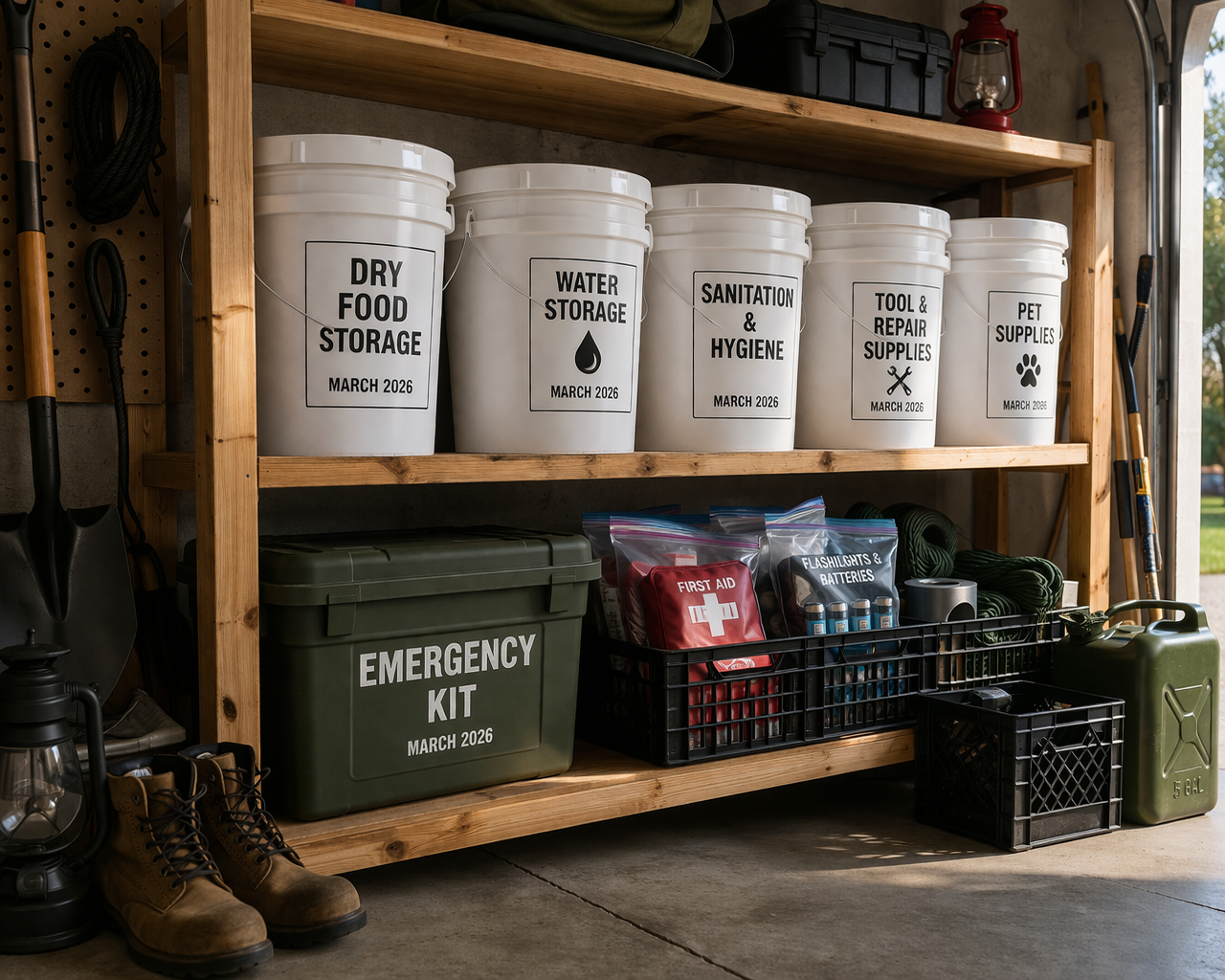
That is why I think the smartest way to repurpose buckets for survival storage is to match each bucket to a clear job. A good bucket system should be organized, labeled, easy to move, and safe for what it contains. Once people understand that, buckets become one of the most useful preparedness tools they can own.
Why Buckets Work So Well for Emergency Storage
A bucket solves several storage problems at once. It protects supplies from dust. It helps keep similar items together. It stacks better than many loose boxes. It is tougher than a paper carton. And if it has a good lid, it can offer some protection from moisture and pests. That is especially helpful when storing emergency items in garages, closets, basements, or utility spaces.
I also think buckets help people prepare in smaller steps. Ready.gov says to build an emergency kit with enough supplies to last several days, including water, food, and items that fit your household’s needs. That can feel overwhelming if you picture buying everything at once. But one bucket at a time feels more manageable. One bucket might hold first-aid items. Another might store shelf-stable food. Another might be for pet supplies or hygiene items. That turns a huge project into smaller parts.
Buckets are also easy to move. That matters more than people think. A giant emergency stash is not very useful if nobody can lift it or find what they need in a hurry. A bucket with a handle can be carried to a car, moved to a safer room, or taken outside if flooding threatens the area. I think that mix of durability and portability is what makes buckets so useful in preparedness planning.
Start With the Right Kind of Bucket
Before I put anything important into a bucket, I think about what the bucket is made for. This matters most for food and water. The CDC says that for water storage, it is best to use FDA-approved food-grade containers and that people should contact the container manufacturer if they are not sure whether a container is food-grade. FEMA likewise recommends food-grade water storage containers for emergency water.
That means I would not assume every hardware-store bucket is automatically safe for drinking water or long-term food contact. Some repurposed buckets are great for tools, batteries, rope, tarps, and hygiene supplies but not ideal for anything people plan to eat or drink. I think this is one of the most important rules in the whole topic: food and water buckets should be clearly separated from general-purpose storage buckets.
If I were setting up a simple system, I would create three categories. First, food-grade buckets for water or dry food storage. Second, clean utility buckets for gear and household supplies. Third, clearly marked buckets for dirty or hazardous items that should never be mixed with food-related use. That kind of separation helps avoid confusion later, especially in a stressful emergency.
Bucket Project 1: Dry Food Storage Buckets
One of the most useful ways to repurpose buckets is to turn them into dry-food storage containers. University of Georgia Extension recommends building emergency food supplies around foods you will actually use and can prepare, and it notes that one long-term strategy is storing bulk staples along with canned and dried foods. Utah State University Extension says wheat and other dry staples can be stored in moisture-proof, food-grade packaging such as Mylar-type bags, polyethylene bags, plastic buckets, or cans, and it notes that foods are best stored in the absence of oxygen and light.
To me, this means buckets work best for dry goods like rice, beans, oats, flour alternatives, pasta, or wheat when they are packed correctly and stored in a cool, dry, dark place. I would not use a bucket alone for every food and assume that is enough. Extension guidance suggests that packaging matters, and for some long-term storage uses, Mylar-type liners and oxygen absorbers are used along with food-grade buckets to reduce oxygen, moisture, and light exposure. Utah State also warns that oxygen absorbers should only be used with dry foods, because moist products stored in low-oxygen packaging can create a botulism risk.
That warning is important. A bucket can be a smart storage tool, but it does not make unsafe food safe. I think the best rule is to keep bucket food storage simple: use dry foods, keep everything labeled, rotate it, and do not guess about items with higher moisture.
I also like the idea of dividing food into smaller units inside the bucket. Utah State notes that storing wheat in smaller bags inside a bucket makes it easier to handle, inspect, and rotate while limiting loss if one package is contaminated. That seems smart to me because it makes the bucket more practical for real life, not just long-term storage theory.
Bucket Project 2: Emergency Water Buckets
Water is one of the most important things any household can store. The CDC says people should keep at least 1 gallon of water per person per day for 3 days, with a 2-week supply better if possible. It also says stored water should be kept in a cool place, away from sunlight and toxic substances, and in clean, sanitized containers with tight covers.
Because of that, I think water buckets should be treated seriously. They are not just “a bucket with water in it.” They need to be food-grade, clean, tightly closed, and clearly labeled for drinking water if that is their purpose. CDC guidance says that if people are unsure whether a container is food-grade, they should check with the manufacturer.
I would also store water buckets where chemicals are not nearby. That matters because the CDC specifically warns not to store water containers around gasoline, pesticides, or similar toxic substances. A survival storage system is supposed to protect people, not quietly contaminate their supplies.
This is also one place where I think labeling is essential. A bucket of drinking water, a bucket for sanitation water, and a bucket for cleaning supplies should never look interchangeable. In an emergency, people do not make their best decisions when everything looks the same.
Bucket Project 3: The Grab-and-Go Bucket Kit
One of my favorite ideas is turning a bucket into a compact emergency supply kit. Ready.gov says emergency kits should include basics like water, food, flashlights, batteries, medications, first-aid items, and other supplies matched to your household’s needs. FEMA material also shows that a large bucket can serve as the container for a preparedness kit.
A bucket kit works best when it is organized by layers. Heavier items can go on the bottom, soft items around the sides, and small essential items in labeled zip bags or pouches inside. I think this works well for supplies like flashlights, spare batteries, gloves, dust masks, hand sanitizer, a whistle, basic first aid, shelf-stable snacks, copies of important information, and other small but useful items.
What I like about this setup is that the bucket itself becomes part of the tool set. Once emptied, the bucket can hold water, carry supplies, or serve as a utility container. In other words, the container is doing double duty. That is exactly the kind of practical thinking I like in preparedness.
Bucket Project 4: Hygiene and Sanitation Storage
Another smart use for buckets is sanitation storage. Disasters often disrupt water service, waste disposal, and normal cleaning routines. Ready.gov says emergency kits should include sanitation and personal hygiene items.
That makes a dedicated hygiene bucket very useful. I would use one to hold things like toilet paper, soap, trash bags, disinfecting wipes, gloves, feminine hygiene items, baby wipes, and other basic sanitation supplies. Keeping all of that together means a household is less likely to scramble when conditions are stressful.
I think this type of bucket is especially helpful because sanitation problems escalate quickly. People tend to focus on flashlights and canned food, but being able to stay clean, contain waste, and protect hands during cleanup can matter just as much. A well-stocked sanitation bucket is not glamorous, but it is deeply practical.
Bucket Project 5: Tool and Repair Buckets
Preparedness is not only about food and water. It is also about being able to fix small problems. A bucket can make a great repair kit container for duct tape, rope, zip ties, work gloves, a utility knife, batteries, chargers, multi-tools, wrenches, screwdrivers, and other household basics.
I think this works especially well because tools are heavy, awkward, and easy to lose. A bucket keeps them together and easy to move. During a storm or outage, being able to grab one repair bucket instead of hunting through drawers can save time and lower stress.
This kind of storage does not need a food-grade bucket. In fact, that is where repurposed general-use buckets shine. A scuffed old bucket that is no longer nice enough for visible storage can still do an excellent job holding cords, fasteners, and hand tools.
Bucket Project 6: Pet Supply Buckets
People often forget pets when planning survival storage. Ready.gov says emergency kits should account for every member of the household, which includes pets.
A bucket can be a great place to store pet food, leashes, collapsible bowls, waste bags, copies of vaccination records, medicines, and comfort items. I think this matters because pet supplies are easy to scatter around the house. In an evacuation or sudden outage, that wastes precious time.
For dry pet food, I would still think carefully about packaging, moisture, and freshness. The same storage basics apply: keep food dry, sealed, labeled, and rotated. A pet bucket is useful only if the contents stay safe and current.
Labeling, Rotation, and Storage Conditions Matter
No matter what goes into a bucket, I think three habits make the system work: label it, date it, and store it wisely. The CDC says emergency water should be stored carefully, and extension guidance for food storage repeatedly emphasizes cool, dry, dark conditions for better shelf life and quality.
That means I would label buckets with what is inside, when it was packed, and whether it is food-safe, water-only, sanitation, tools, or pets. I would also avoid leaving important supplies in harsh heat if possible. Extension guidance notes that higher temperatures shorten storage life for dried foods.
Rotation matters too. A survival bucket should not become a forgotten time capsule. Ready.gov recommends storing foods your family will eat, and that only works well if the supplies are checked and used before quality drops too far.
Mistakes I Think People Should Avoid
The biggest mistake is treating every bucket like it is safe for every purpose. Food and water storage need more care than tool storage. Another mistake is packing a bucket so heavily that nobody can lift it. I also think some people overload buckets with too many random supplies instead of choosing one purpose for each container.
Another common problem is poor labeling. In a calm moment, a person may remember which white bucket is rice and which white bucket is pet litter. In a stressful emergency, that confidence disappears fast. Clear labels solve that.
I would also avoid storing water or food buckets near fuel, pesticides, or other chemicals. CDC guidance is very clear about keeping stored water away from toxic substances.
Final Thoughts
I think buckets are useful because they make preparedness feel doable. They are not flashy, but they solve real problems. They protect supplies, simplify organization, and help break a big emergency plan into smaller, more manageable pieces. FEMA, Ready.gov, and the CDC all support the larger idea that households should keep water, food, and basic supplies ready for several days after a disaster. A bucket is not the answer to everything, but it can be a very smart place to begin.
To me, the best bucket projects are the ones with a clear job. A food bucket. A water bucket. A sanitation bucket. A repair bucket. A pet bucket. When each one is matched to its purpose, clearly labeled, and checked regularly, a simple bucket becomes more than storage. It becomes part of a survival system that is practical, affordable, and ready when it matters.
Related SurviveHack guides
Keep building your practical plan with keep food cold during a power outage and what to do when the power goes out at night. These internal links make it easier to move from one emergency task to the next without hunting through the site.
Official guidance note
For safety-sensitive decisions, compare this guide with Ready.gov preparedness planning and local instructions for your area. SurviveHack articles are practical informational guides, not a replacement for emergency, medical, legal, or public safety direction.