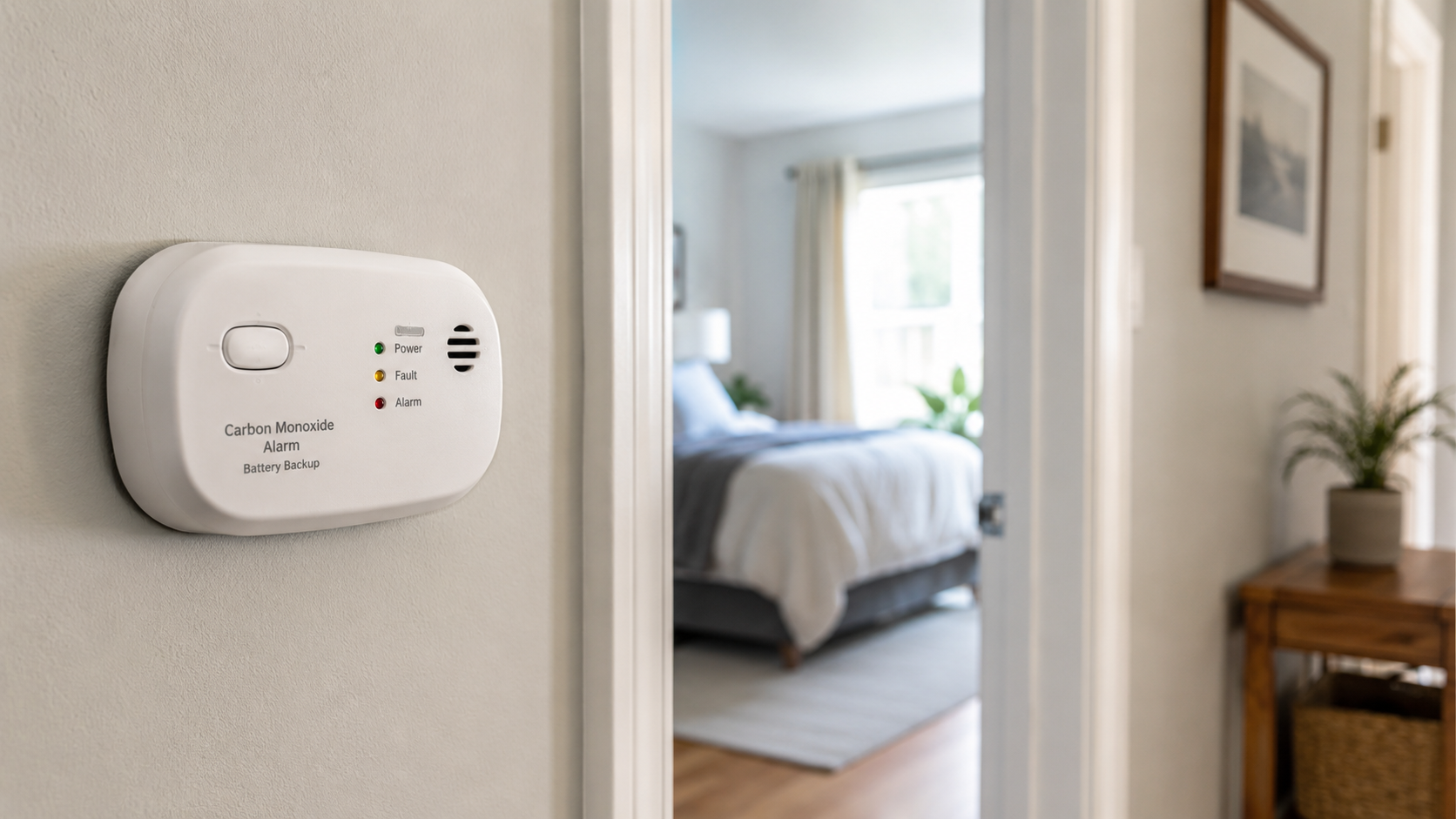
Carbon monoxide is one of the most dangerous household risks because it does not announce itself. You cannot see it. You cannot smell it. You cannot taste it. By the time someone realizes something is wrong, they may already feel dizzy, weak, confused, or too tired to respond clearly.
That is why every home should have carbon monoxide detectors. But not just any detector. A carbon monoxide detector with battery backup gives your household an added layer of protection when the power goes out, when storms disrupt utilities, or when fuel-burning equipment is being used nearby.
A basic plug-in detector is better than nothing, but relying on electricity alone is a weak plan. Storms, hurricanes, winter weather, overloaded circuits, and local outages can all knock out power. Those are also the exact times many people start using generators, fireplaces, gas heaters, grills, or other backup heat and power sources. That is when carbon monoxide risk can rise.
A detector with battery backup keeps working when the house goes dark. That one detail can matter more than people realize.
What Carbon Monoxide Is
Carbon monoxide, often shortened to CO, is a poisonous gas that can be produced when fuels do not burn completely. It can come from gas furnaces, fireplaces, gas stoves, water heaters, generators, grills, vehicles, wood stoves, and other fuel-burning equipment.
The scary part is not that carbon monoxide exists. The scary part is that it is easy to miss. Smoke has a smell. A water leak may leave a stain. A broken pipe makes a mess. Carbon monoxide can build up quietly while everything in the house appears normal.
That is why a detector is not optional. It is the warning system your body does not naturally have.
Why Battery Backup Matters
A carbon monoxide detector with battery backup can keep operating even when household power is unavailable. That matters because power outages are one of the times carbon monoxide risks often increase.
During outages, people may use generators, propane heaters, fireplaces, camp stoves, grills, or other equipment to stay warm, cook, or keep essential appliances running. Some of those tools can be safe when used correctly, but dangerous when used indoors, too close to the house, inside a garage, or near vents, doors, or windows.
The problem is simple: a plug-in-only detector may stop working during an outage. A battery-powered detector or plug-in detector with battery backup keeps watch when the electricity fails.
This is not an expensive upgrade. It is one of the cheapest life-safety improvements you can make in a home.
Storm Season Makes Carbon Monoxide Risk Worse
Storm season is not just about wind and rain. It is also about outages, cleanup, emergency heat, temporary cooking setups, and people making rushed decisions under stress.
After severe weather, someone may run a generator in a garage because it is raining. Someone may move a grill under a covered porch. Someone may use a gas stove for heat. Someone may start a vehicle near an attached garage. Someone may bring outdoor equipment too close to the home because they are trying to keep it dry.
Those are the decisions that create carbon monoxide danger.
A detector with battery backup does not replace safe behavior, but it gives your household a warning if something goes wrong. That is the whole point. Good preparedness is not pretending nothing will fail. Good preparedness is having backups when people make mistakes or conditions change.
Homes With Gas Appliances Need CO Detection
If your home has gas heat, a gas water heater, gas stove, fireplace, wood stove, attached garage, or any fuel-burning appliance, carbon monoxide detection should be treated as basic home safety.
Even properly installed equipment can become risky if something breaks, vents clog, parts wear out, or the system is poorly maintained. Birds’ nests, debris, corrosion, storm damage, cracked heat exchangers, and blocked exhaust paths can all create problems.
A detector is not a replacement for maintenance. You still need heating systems, chimneys, vents, and appliances checked and serviced when needed. But a detector gives you an alert if carbon monoxide begins to build up inside the home.
That is especially important while people are sleeping. You may not wake up from symptoms alone. The alarm is what gives you a chance to get out.
All-Electric Homes Are Not Automatically Exempt
Some people assume they do not need a carbon monoxide detector because their home is all-electric. That logic is too thin.
Even if your main appliances are electric, carbon monoxide can still become a risk if you have an attached garage, use a generator during outages, use outdoor cooking equipment, have a fireplace, use propane heaters, or bring fuel-burning tools onto the property.
Also, homes change over time. A future buyer, renter, family member, guest, or contractor may use equipment differently than expected. A detector is cheap protection against a serious hazard.
If there is any chance fuel-burning equipment may be used in or around the home, carbon monoxide detection belongs in the safety plan.
Where Carbon Monoxide Detectors Should Go
A good rule is to place carbon monoxide detectors near sleeping areas and on every level of the home. Follow the manufacturer’s instructions for the exact placement because models can vary.
Do not hide detectors behind furniture, curtains, doors, or decorations. Do not place them where they can be covered, unplugged, damaged, or ignored. A detector shoved behind a dresser is not a safety system. It is clutter with batteries.
For larger homes, one detector is usually not enough. Bedrooms on opposite sides of the house may need separate protection. Multi-story homes should have detection on each level. If your home has an attached garage, fuel-burning appliances, or multiple sleeping areas, plan accordingly.
Interconnected alarms can be even better because when one alarm sounds, the others sound too. That helps if the problem starts far from the bedroom or in another part of the house.
Battery Backup vs. Battery-Only Detectors
There are two common options worth considering: battery-only carbon monoxide detectors and plug-in detectors with battery backup.
A battery-only detector is simple and can be placed in more locations because it does not need an outlet. Many newer models use long-life sealed batteries. These can be a good choice where outlet placement is inconvenient.
A plug-in detector with battery backup plugs into the wall but continues working during an outage. These are common, easy to use, and often include digital displays or other features depending on the model.
The best choice depends on your home layout. What matters most is that the detector keeps working when the power goes out and is placed where it can actually protect people.
Do not buy the cheapest mystery device you can find from a questionable source. This is life-safety equipment. Use reputable brands and look for recognized safety listings, such as UL listing, when purchasing.
Test Detectors Before Storm Season
Owning a detector is not enough. It needs to work.
Test carbon monoxide detectors according to the manufacturer’s instructions. Many safety organizations recommend monthly testing. Replace batteries as directed. If the alarm uses replaceable batteries, do not wait for the low-battery chirp to start annoying everyone at 2 a.m.
Also check the expiration date or manufacturing date. Carbon monoxide detectors do not last forever. Many need replacement after several years, depending on the model. If you cannot remember when you bought it, check the back of the device.
An expired detector may not give reliable protection. If it is old, damaged, discolored, missing parts, or constantly malfunctioning, replace it.
Know the Difference Between Alarm Sounds
Households should know what each alarm means. Smoke alarms, carbon monoxide alarms, and low-battery chirps may sound different depending on the model.
Read the instructions. Yes, actually read them. This is not the place to guess.
Teach everyone in the home what to do if the carbon monoxide alarm sounds. Do not stand around debating whether the alarm is “probably fine.” Leave the home, get to fresh air, and call emergency services or the appropriate local emergency number.
Do not go back inside until professionals say it is safe. Opening windows may help ventilation, but it is not a substitute for leaving and getting help.
Generator Safety and CO Detectors Go Together
A carbon monoxide detector with battery backup is especially important if your storm plan includes a generator.
Generators should never be used inside a home, garage, basement, crawl space, shed, or enclosed porch. They should be used outside, far away from doors, windows, and vents, with exhaust pointed away from the home. Even a garage with the door open is not safe.
This is where people make dangerous mistakes. They think “near the open garage door” is outside enough. It is not. They think a covered porch is fine because it has open sides. It may not be. They think rain protection matters more than exhaust direction. It does not.
If you own a generator, you need working carbon monoxide detectors. That is not optional. It is part of owning the equipment responsibly.
Do Not Rely on Symptoms Alone
Carbon monoxide poisoning symptoms can resemble other problems. Headache, dizziness, weakness, nausea, vomiting, chest pain, confusion, and fatigue can be mistaken for the flu, food poisoning, stress, or exhaustion.
That makes carbon monoxide especially dangerous during storms and outages. People may already be tired, cold, stressed, or dealing with cleanup. They may explain away symptoms instead of recognizing danger.
A detector cuts through the guessing. If the alarm sounds, treat it seriously.
Renters Need CO Detectors Too
Renters sometimes assume carbon monoxide safety is only the landlord’s job. Legally, requirements vary by location, but practically, your safety is still your safety.
If you rent, check whether your home or apartment has working carbon monoxide detectors. If it does not, contact the landlord or property manager. You can also use a battery-operated detector for added protection, especially near sleeping areas.
Do not unplug detectors because they are inconvenient. Do not remove batteries because of a chirp. A chirping alarm usually means it needs attention, not that it should be disabled.
If a detector keeps going off, treat it seriously and report the issue.
Pet Owners Should Care About CO Detection
Carbon monoxide does not just affect people. Pets can also be harmed. Dogs, cats, birds, and other animals inside the home may show signs of distress, weakness, vomiting, unusual behavior, or collapse if exposed.
Because pets cannot explain what they feel, prevention matters. A working detector protects the whole household, not just the humans.
For SurviveHack’s audience, this matters. A realistic home preparedness plan should include pets, especially during storm season when families may be sheltering in place or using backup power.
Add CO Detectors to Your Storm Prep Checklist
Carbon monoxide detectors should be part of the same storm prep routine as flashlights, batteries, water, food, weather alerts, and charging power banks.
Before storm season, check:
- Do you have CO detectors near sleeping areas?
- Do you have one on every level of the home?
- Do they have battery backup or battery power?
- Have they been tested recently?
- Are the batteries fresh?
- Are any units expired?
- Does everyone know what to do if the alarm sounds?
- Is your generator plan safe?
That checklist takes only a few minutes, but it can prevent a major mistake.
The Bottom Line
Every home needs a carbon monoxide detector with battery backup because carbon monoxide is invisible, outages make risks worse, and electrical power is not guaranteed during emergencies.
This is not a luxury upgrade. It is not complicated preparedness. It is basic home safety.
If your home already has detectors, test them and check their age. If you only have plug-in units without backup, upgrade them. If you have no carbon monoxide detectors at all, fix that before spending money on less important storm-season gear.
Preparedness is not about buying random gadgets. It is about handling the risks that can actually hurt people. Carbon monoxide detection belongs near the top of that list.
Helpful Official Resources
CDC Carbon Monoxide Poisoning Basics:
https://www.cdc.gov/carbon-monoxide/about/index.html
CDC Prevent Carbon Monoxide Poisoning During Emergencies:
https://www.cdc.gov/natural-disasters/psa-toolkit/prevent-carbon-monoxide-poisoning.html
U.S. Consumer Product Safety Commission Carbon Monoxide Information Center:
https://www.cpsc.gov/Safety-Education/Safety-Education-Centers/Carbon-Monoxide-Information-Center
CPSC Carbon Monoxide Fact Sheet:
https://www.cpsc.gov/safety-education/safety-guides/carbon-monoxide/carbon-monoxide-fact-sheet
NFPA Carbon Monoxide Safety:
https://www.nfpa.org/education-and-research/home-fire-safety/carbon-monoxide
Ready.gov Power Outages:
https://www.ready.gov/power-outages