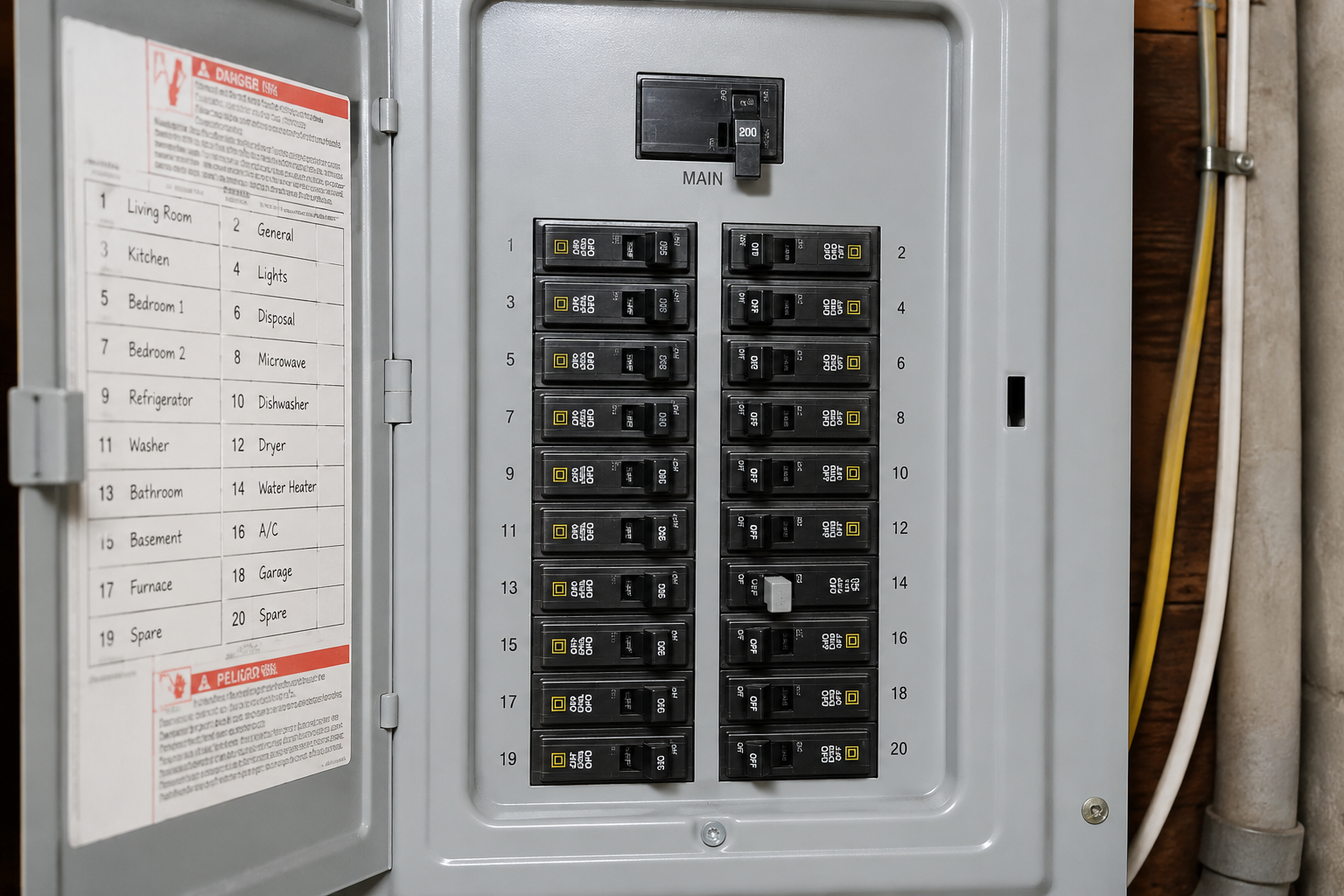
A circuit breaker that trips once may not be a big deal. A breaker that keeps tripping is different. That is your home telling you something is wrong, overloaded, damaged, wet, or unsafe.
The mistake many people make is treating a tripped breaker like an inconvenience instead of a warning. They walk to the panel, flip it back on, and go right back to using the same appliances the same way. If it trips again, they reset it again. That is not troubleshooting. That is gambling with an electrical problem.
A breaker trips to stop power from continuing through a circuit when the electrical load or fault becomes unsafe. In plain terms, it is doing its job. Your job is to figure out why it is happening and whether the problem is simple, like too many devices on one circuit, or serious, like a short, ground fault, bad appliance, damaged outlet, or failing breaker.
This guide is for basic homeowner safety and troubleshooting. It is not a guide to opening your electrical panel, replacing breakers, or repairing wiring. If the signs point to a real electrical problem, the smart move is to call a licensed electrician.
First, Do Not Keep Resetting It
If your breaker trips, you can usually reset it once after checking for an obvious overload. But if it trips again, stop.
Repeatedly resetting a breaker without fixing the cause can allow a dangerous condition to continue. The breaker may be warning you about too much demand, damaged wiring, a faulty appliance, moisture, heat, or a short circuit.
A breaker that trips repeatedly is not “being annoying.” It is protecting the circuit. Do not tape it in place. Do not force it. Do not replace it with a bigger breaker because you think that will solve the problem. That is how people create fire hazards.
If a breaker trips immediately after you reset it, leave it off and investigate safely.
Know the Common Reasons Breakers Trip
A breaker usually trips for one of several reasons.
The most common cause is an overloaded circuit. This happens when too many devices are pulling power from the same circuit. Space heaters, microwaves, air fryers, portable air conditioners, hair dryers, toaster ovens, and power tools can draw a lot of electricity. Put too many of those on the same circuit, and the breaker may shut off.
Another common cause is a short circuit. This can happen when electrical current takes a path it should not, often because of damaged wiring, a bad connection, or a faulty device. Short circuits can be dangerous and are not something to ignore.
A ground fault can also trip a breaker, especially in areas where water may be involved, like bathrooms, kitchens, garages, laundry rooms, basements, crawl spaces, and outdoor outlets. Ground faults are one reason GFCI protection is used in damp or wet locations.
AFCI breakers may trip when they detect conditions associated with arcing. Arc faults can be caused by damaged cords, loose connections, old wiring, or certain faulty devices.
Sometimes the problem is not the circuit. It may be a failing appliance, a damaged cord, a loose outlet, or a breaker that has worn out. The point is simple: the breaker is a symptom. You still need to find the cause.
Step One: Identify What Lost Power
Before touching the breaker panel, figure out what stopped working. Which room lost power? Which outlets? Which lights? Which appliances?
This helps you understand what is on that circuit. A “bedroom breaker” may also power a hallway, bathroom outlet, closet light, or part of another room. Older homes can have confusing circuits that do not match common sense.
Make notes as you go. If you are building a practical home safety plan, this is a good time to improve your breaker panel labels. Vague labels like “front room” or “plugs” are not helpful during an outage or emergency.
If you do not know what a breaker controls, map it when things are calm. Plug in a lamp, turn things on and off, and label the panel clearly. That one boring job can save a lot of frustration later.
Step Two: Unplug What Was Running
If the breaker tripped while you were using multiple devices, unplug them before resetting the breaker.
Do not just turn devices off. Unplug them. This is especially important for high-draw appliances and anything that felt hot, smelled strange, sparked, buzzed, flickered, or stopped working right before the breaker tripped.
Common overload suspects include:
Space heaters
Hair dryers
Microwaves
Air fryers
Toaster ovens
Portable air conditioners
Dehumidifiers
Vacuum cleaners
Power tools
Electric pressure cookers
Window AC units
Large gaming computers
Treadmills
Extension cords packed with devices
After unplugging the items, reset the breaker one time. If it stays on, the issue may have been overload or one of the devices. If it trips immediately with everything unplugged, leave it off. That points to a circuit problem that needs professional attention.
Step Three: Add Devices Back One at a Time
If the breaker stays on after you unplug everything, add devices back slowly.
Plug in one item. Wait. Use it normally. Then try the next item. If the breaker trips when one specific appliance is plugged in or turned on, that appliance may be the problem or it may simply be drawing too much power for that circuit.
For example, a portable heater and a hair dryer on the same bathroom or bedroom circuit is asking for trouble. A microwave and air fryer on the same kitchen circuit may overload it. A window AC unit may need a dedicated circuit depending on its power demand and the home’s wiring.
If one appliance trips different circuits in different areas of the home, stop using that appliance until it can be inspected, repaired, or replaced.
Step Four: Look for Warning Signs
Do a safe visual and sensory check. You are not opening outlets or panels. You are looking for obvious warning signs.
Pay attention to:
Burning smell
Buzzing or crackling sounds
Warm or hot outlets
Discolored outlets or switch plates
Sparks when plugging something in
Loose plugs that fall out of outlets
Flickering lights
A breaker that feels unusually hot
A device cord that is frayed, cracked, or pinched
Melted plastic near plugs or outlets
Water near an outlet, appliance, extension cord, or power strip
If you notice any of these, stop using that circuit or device and call a licensed electrician. Do not try to “wait and see” with burning smells, heat, buzzing, or discoloration. Those are not normal.
Step Five: Check for Water or Damp Areas
Water and electricity do not mix. If the breaker serves a bathroom, kitchen, garage, basement, outdoor outlet, laundry area, crawl space, porch, shed, or pool area, moisture could be involved.
Storms, roof leaks, plumbing leaks, condensation, wet extension cords, damaged outdoor covers, and damp appliances can all contribute to breaker trips.
If there is standing water, wet outlets, wet cords, or water intrusion near electrical equipment, do not touch anything wet or plugged in. Keep the breaker off and call a professional. If there is active flooding or serious electrical danger, leave the area and contact emergency services or the utility provider as appropriate.
For outdoor outlets, make sure weather covers are intact and closed. If a GFCI outlet will not reset, there may be moisture, a fault, or a downstream problem.
Step Six: Understand GFCI and AFCI Trips
Not every “breaker trip” looks the same. Sometimes a GFCI outlet trips instead of the breaker in the panel. GFCI outlets are common in kitchens, bathrooms, garages, laundry areas, basements, and outdoor spaces.
If an outlet suddenly stops working, look for a nearby GFCI outlet with “test” and “reset” buttons. It may control other outlets in the same area. Press reset only if the area is dry and there are no signs of damage.
AFCI breakers are different. These are designed to help detect conditions associated with electrical arcing. They may be found in bedrooms, living areas, and other parts of newer homes depending on code requirements at the time of installation.
If an AFCI breaker repeatedly trips, do not assume it is “just sensitive.” It may be reacting to a damaged cord, loose connection, failing device, or wiring issue. An electrician can help determine whether it is nuisance tripping or a real hazard.
Step Seven: Stop Using Extension Cords as Permanent Wiring
A lot of breaker problems start with people trying to make one outlet do the job of five.
Extension cords and power strips are for temporary convenience, not permanent home wiring. They are especially risky when used with high-draw appliances like heaters, portable AC units, microwaves, refrigerators, freezers, air fryers, toaster ovens, or power tools.
A power strip does not magically give a circuit more capacity. It only gives you more places to plug things in. The circuit behind the wall still has limits.
If you constantly need extension cords in one room, your home may need additional outlets or circuits. That is not glamorous, but it is safer than running overloaded cords under rugs, behind furniture, or through doorways.
Never run extension cords under rugs or carpets. Heat can build up, damage can go unnoticed, and the cord can become a fire risk.
Step Eight: Reduce the Load
If the problem is overload, the fix may be simple: move devices to different circuits or stop using high-draw appliances at the same time.
For example, do not run a space heater, gaming PC, mini fridge, and vacuum on the same bedroom circuit. Do not run the microwave, toaster oven, and air fryer on the same kitchen circuit if it keeps tripping. Do not run a portable AC unit on a circuit already carrying several other loads.
A practical trick is to learn which outlets are on different circuits. Just because two outlets are in different rooms does not always mean they are on different breakers. Test and label carefully.
If your household regularly overloads the same circuit, that is a sign the home may need an electrical upgrade. Older homes were not built for modern loads like computers, chargers, portable appliances, window AC units, and entertainment systems in every room.
Step Nine: Know When the Breaker Itself May Be the Problem
Breakers can wear out, but homeowners should not jump to that conclusion first. Many people blame the breaker because they want the cheapest explanation. Sometimes it is the breaker. Often, it is overload, a device, a ground fault, or wiring.
Signs that a breaker or panel needs professional attention include:
The breaker trips with nothing plugged in
The breaker will not stay reset
The breaker feels hot
There is buzzing from the panel
There is a burning smell near the panel
There is rust, corrosion, or moisture around the panel
The panel is outdated, damaged, or poorly labeled
Multiple breakers trip often
Lights flicker across the home
You see scorch marks or melted areas
Do not remove the panel cover to investigate. The inside of an electrical panel can be dangerous even when some breakers are off. This is where the line is clear: call a licensed electrician.
What Not to Do
Do not keep resetting the breaker over and over.
Do not replace a breaker with a larger one to “stop the tripping.”
Do not tape or jam a breaker in the on position.
Do not ignore burning smells, buzzing sounds, heat, discoloration, or sparks.
Do not use high-draw appliances on cheap extension cords.
Do not run cords under rugs.
Do not open the breaker panel if you are not qualified.
Do not assume a tripping breaker is harmless because “it has always done that.”
That last one matters. A repeated electrical problem is not normal just because your household got used to it.
When to Call an Electrician
Call a licensed electrician if the breaker trips repeatedly after you reduce the load, trips immediately after resetting, trips when nothing is plugged in, or trips alongside any signs of heat, smell, buzzing, discoloration, sparks, or water exposure.
You should also call if the same room has frequent power problems, if you rely on extension cords every day, if an appliance keeps tripping circuits, or if your panel is old, damaged, rusty, or confusing.
This is not being dramatic. Electrical fires and shocks are real risks. A service call is cheaper than damaged wiring, lost appliances, or a house fire.
If you rent, contact your landlord or property manager and document the issue. Do not let them brush it off if the breaker keeps tripping. Use clear language: “This breaker has tripped multiple times and I am concerned about an electrical safety issue.”
Add Breaker Checks to Your Home Safety Routine
Breaker issues often show up during storms, heat waves, winter cold snaps, and power outages because people use more equipment than usual. Space heaters, portable AC units, dehumidifiers, sump pumps, generators, chargers, and cooking appliances can add extra demand.
Before storm season, take a few minutes to check your panel labels, test GFCI outlets, inspect extension cords, move high-draw appliances off crowded power strips, and make sure major safety devices like smoke alarms and carbon monoxide detectors are working.
This is boring maintenance, but boring is good. Boring means fewer surprises when the weather gets ugly.
The Bottom Line
If your breaker keeps tripping, do not ignore it and do not keep forcing it back on. Start with the safe basics: identify what lost power, unplug what was running, reset once, and add devices back one at a time.
If the breaker trips again, if it trips with nothing plugged in, or if you notice heat, smoke, burning smells, buzzing, sparks, water, or discoloration, stop and call a licensed electrician.
A circuit breaker is not the problem. It is the warning. Treat it that way.
Related SurviveHack guides
Keep building your practical plan with keep food cold during a power outage and what to do when the power goes out at night. These internal links make it easier to move from one emergency task to the next without hunting through the site.
Official guidance note
For safety-sensitive decisions, compare this guide with Ready.gov make a plan guidance and local instructions for your area. SurviveHack articles are practical informational guides, not a replacement for emergency, medical, legal, or public safety direction.