
The elevator takes you home every day, but it should not be the route your fire plan depends on. Above the first floor, the important journey is the one from your bedroom, through the apartment door, into a usable exit stair, and all the way to a safe place outdoors. Most residents make only pieces of that journey in ordinary life.
Planning also needs a second branch: what happens if the hallway is smoky, the nearest stair is unusable, or someone cannot descend it? A useful apartment fire escape plan identifies those limits before an alarm, instead of assuming every household can follow the same arrow.
Get the instructions for this building, not a similar one
Ask management for the building's current fire and evacuation plan. Read posted notices and ask the local fire department to explain anything unclear. Find out how residents are warned, where the exit stairs are, and what instructions apply when the fire is inside your unit versus elsewhere.
Construction matters. For example, FDNY's notice for non-combustible apartment buildings distinguishes a fire inside the apartment from one elsewhere and may direct residents to remain inside when the fire is outside their unit. That is a building-specific strategy, not permission to ignore alarms in every apartment building.
Do not classify your building by its height, brick facade, age, or a neighbor's description. Have management or the fire department identify the applicable plan. If you hear official voice instructions during an incident, follow them; if your own conditions become dangerous or you cannot follow an evacuation instruction, contact 911.
Keep the plan where visitors and everyone who lives with you can find it. A saved phone copy helps when away from home, but a paper copy prevents one person's locked phone from becoming the only source of instructions.
Walk each exit route until it reaches open air
Locate all exit stairs accessible from your floor. Walk the permitted routes during normal conditions, ideally with management if access is confusing. Note the stair identifiers, floor markings, turns, and final discharge doors. A route is not understood until you know where it leaves the building.
The USFA apartment fire safety handout recommends counting doors between your apartment and the nearest fire exit. This can support orientation in darkness. It is not a reason to enter smoke or keep moving through worsening conditions because you think the exit is close.
Look for the failure points
Does the nearer stair discharge behind the building rather than into the lobby? Is the alternate stair at the opposite end of a long corridor? Are any routes affected by construction? Ask about stair reentry restrictions rather than experimenting with doors that could lock you out. Do not assume every stair permits movement back onto every floor.
Report stored furniture, broken lighting, damaged doors, or a blocked exit to management. Use documenting unresolved landlord safety repairs to organize a non-emergency report, and contact the local fire prevention office about unresolved hazards. An active fire or immediate threat belongs with 911, not an email queue.
Never wedge a stairwell or apartment fire door open to make travel easier. Closed doors help limit smoke and heat spread. Keep your own hall clear as well; the path from the bed to the front door counts just as much as the shared corridor.
Plan around the people who actually live there
Name an adult responsible for helping each young child, and agree on a backup when that adult is away. Children should not be expected to search rooms, gather belongings, or wait for a family conference. Explain that the outside meeting place is where separated household members reconnect.
For someone who cannot use stairs independently, arrange a building-specific assistance plan with management and the fire department before an emergency. Ask where to wait if evacuation is impossible, how to communicate that location, and what approved assistance is available. A promise that a neighbor will probably help is not a complete plan.
Do not improvise carrying a wheelchair user down multiple flights or assume an evacuation chair is usable without trained assistance. Plan for days when the helper is absent, the resident is alone, or a temporary injury changes their abilities. During a fire, tell the dispatcher immediately if anyone cannot descend the stairs.
USFA's guidance for people with disabilities includes alarm accessories such as vibrating pads and strobes for people who are deaf or hard of hearing. Discuss suitable equipment and installation with management or a qualified professional. A plan that assumes an alarm will wake someone should include a way to verify that assumption.
When the alarm sounds, protect the route before possessions
If fire starts in your apartment, get everyone moving toward a safe exit. Close the room door on the fire if you can do so without delay or exposure, and close the apartment door as you leave. Do not pause to retrieve documents, unplug equipment, find the source of smoke, or fight a fire that threatens escape.
Before opening a closed apartment door, check it for heat. USFA says not to open a warm door. If it is cool, open slowly and assess the hallway from a low position. A cool door alone does not prove the corridor or stairs are safe.
When evacuation is called for and the way is clear, follow the building's exit route. Use the stairs, not the elevator, unless the fire department specifically directs otherwise. Activate a manual fire alarm on the way out if accessible without delaying escape. Do not assume an alarm automatically means someone has completed a 911 call.
Once outside, call 911, go to the meeting place, and keep building entrances and apparatus access clear. Tell firefighters about anyone missing and their last known location. Stay out until the fire department permits reentry, even if the alarm stops or another resident goes back inside.
If smoke takes away the way out
Picture a fourth-floor household reaching its door and finding smoke in the corridor. The plan should not require guessing how far the smoke extends or trying the elevator. If escape is blocked, keep the door closed, call 911, and explain the situation. Use an alternate route only if it is genuinely safe and consistent with the building plan.
Do not push into a smoky stairwell because another person is using it. Do not head to the roof unless that is part of an approved route or firefighters direct you. Familiarity with a door or landing does not make it a protected waiting area.
Give the dispatcher a location that can be found
Say the street address, building or tower identifier, floor, apartment number, number of people with you, and any mobility needs. Describe smoke or heat at your door and any change in conditions. If you move to another room or approved waiting location, tell the dispatcher rather than leaving responders with an old location.
The USFA high-rise instructions advise people who cannot escape to reduce smoke entry around doors and vents with towels or sheets and stay in contact with the fire department. Close doors between you and the fire. These are temporary protective actions while seeking help, not a guarantee that an apartment can remain safe indefinitely.
Do not spend time fetching supplies before making the emergency call. Follow the dispatcher's instructions and report worsening smoke, heat, or difficulty remaining where you are. Keep the phone with you and conserve its charge without ending a needed call.
An upper-floor window is not an ordinary second exit
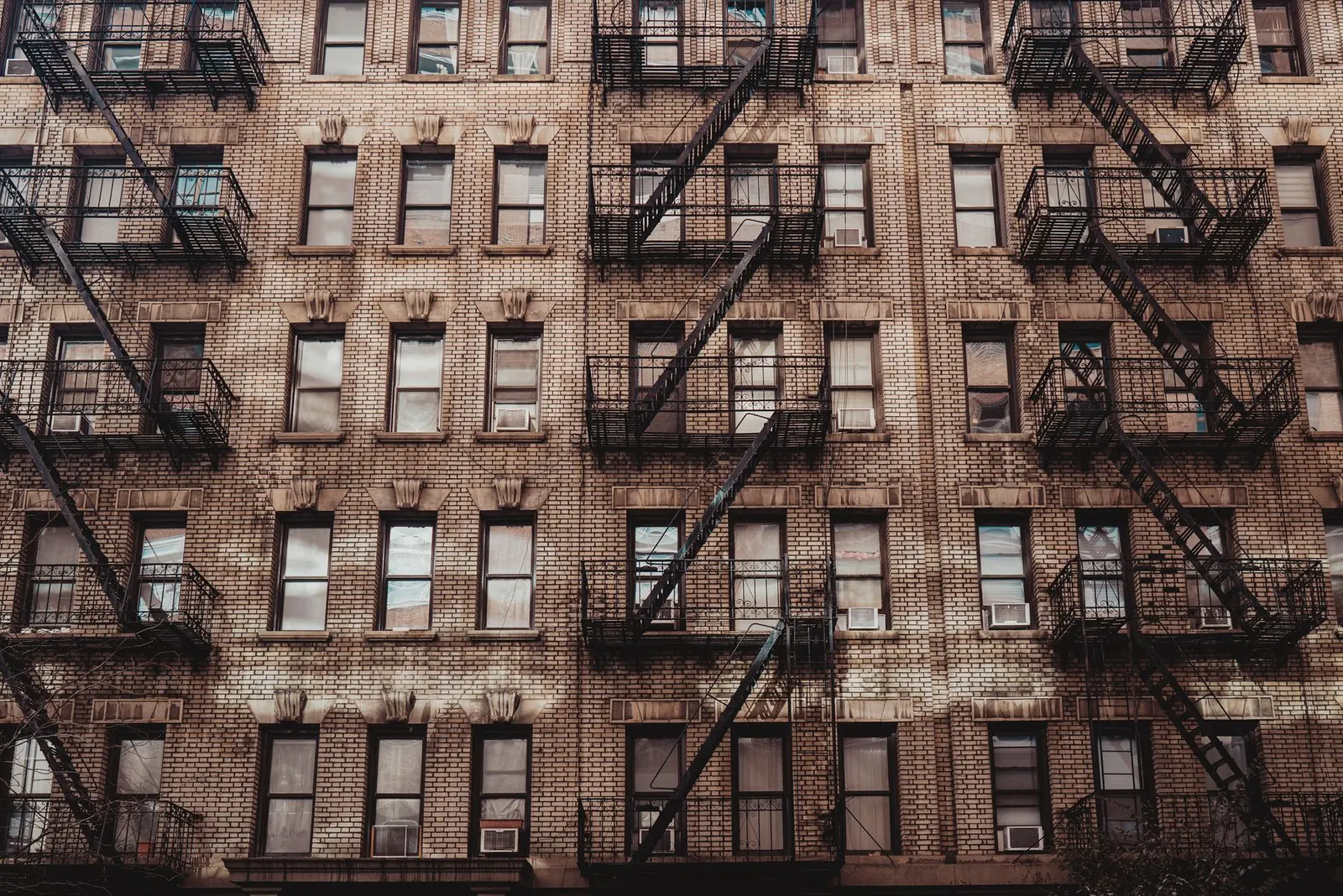
A window several stories up cannot be treated like a ground-floor doorway. Do not jump, make a rope from bedding, climb between balconies, or assume a portable ladder can serve any height or window. An existing exterior fire escape must be part of a route you understand and can use safely, not a structure you first investigate during a fire.
Ask management and the local fire department about the actual secondary route for your unit. If there is no obvious alternative to a blocked apartment door, bring that question to them now. Drawing a second arrow to a window does not create a usable exit.
When trapped, signal your location as directed. USFA describes briefly opening a window slightly to display a bright cloth, then closing it to avoid drawing smoke inside. Do not break windows or leave them open indiscriminately. Tell the dispatcher about smoke or flames outside that window.
Rehearse the decisions without staging a dangerous drill
Start at the sleeping areas and talk through who assists whom, where you turn, and where you meet. Walk the clear routes at a normal pace. Do not run down stairs, practice blindfolded, enter restricted spaces, or activate a building alarm without an authorized drill arrangement.
Test household smoke alarms according to their instructions and tell management about faults. USFA recommends monthly testing. Fold this into the specific alarm checks in simple home fire safety fixes, while leaving building equipment and electrical work to responsible professionals.
Finish by asking each person a different question: which stair do you use if the nearest one is blocked, what do you tell 911 if you cannot leave, and where do you wait outside? Put any unanswered question on a short message to management or the fire department. The useful result is not a perfect drawing; it is knowing the next safe action when the expected route is unavailable.
Photo: Aleks Marinkovic, Pexels License. Cropped and resized for this article.