
The kitchen can feel comfortable while the water line behind its sink is getting dangerously cold. A closed cabinet, an exterior wall, and a small draft can create a very different environment from the one measured by the hallway thermostat. Preventing frozen pipes starts with finding those colder pockets, not simply turning the whole house warmer and hoping.
A hard-freeze forecast is a deadline for preparation, not a precise prediction of which pipe will freeze. The useful questions are where your water travels, whether heat reaches it, and what you can safely change before nightfall. If a faucet has already stopped flowing or a pipe is leaking, skip prevention work and arrange plumbing help.
Follow the water into the cold parts of the house
Walk the accessible plumbing route in daylight. Start at the water service entry and look toward exterior-wall sinks, an unheated garage, basement edges, and any laundry area separated from the heated rooms. The American Red Cross frozen-pipe guidance identifies unheated spaces and poorly insulated exterior walls as common trouble spots. Both hot and cold supply lines need attention.
You do not need to open walls to make a useful map. Note a sink that froze previously, a cabinet with a noticeable draft, or a garage line that remains exposed. Take photographs of reachable areas so a plumber can understand the layout. Leave cramped crawl spaces, damaged floors, and inaccessible attic plumbing to someone equipped to inspect them.
Prioritize the known weak point over the most visible pipe. For example, insulating a long basement run may be worthwhile, but it does not address the short exposed section beside a drafty service entry. If time is short, tell the plumber exactly which fixture has a history of losing flow rather than requesting a vague winter check.
Finish outdoor faucet work while everything still flows
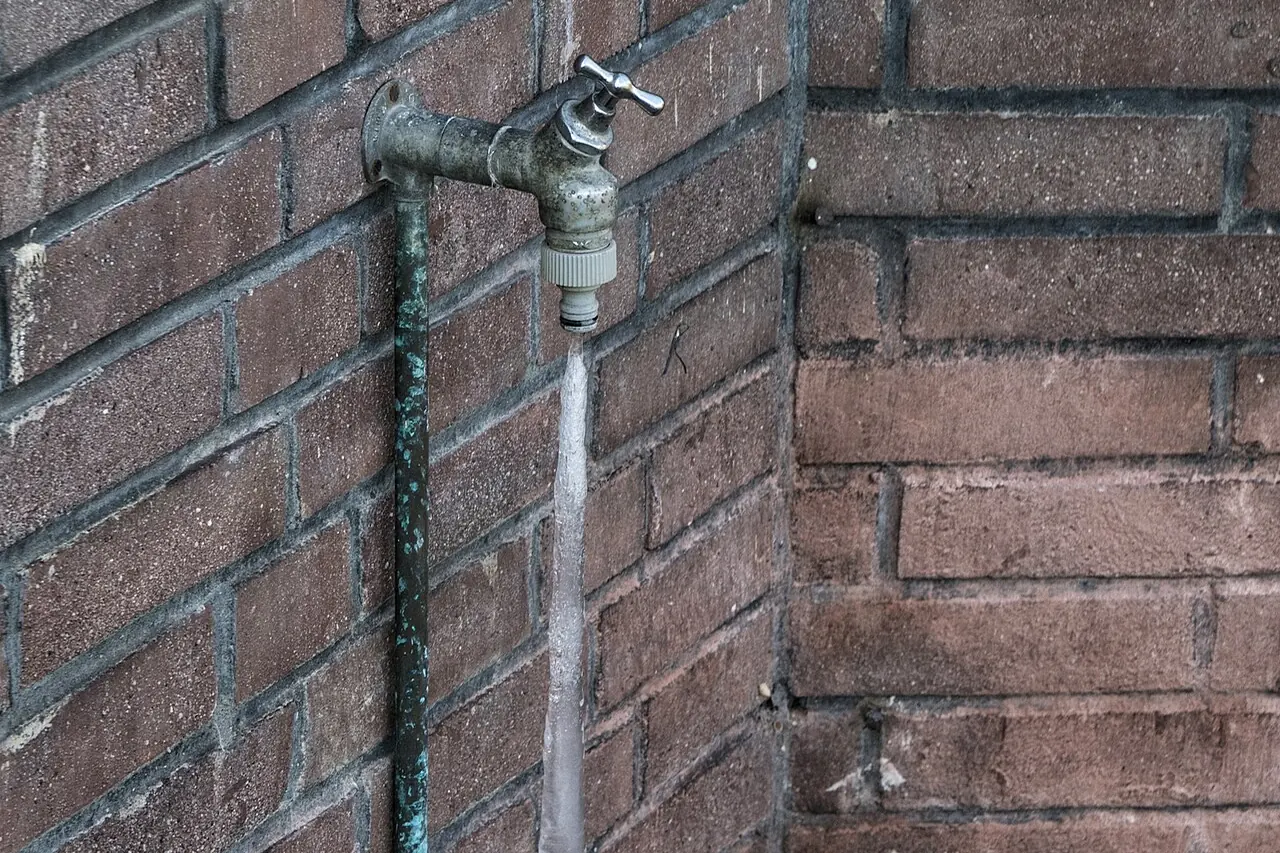
Disconnect garden hoses, including short connector hoses and attached splitters. Drain and store them. For a conventional outdoor faucet with a dedicated indoor isolation valve, the Red Cross recommends closing that supply valve and opening the outdoor faucet to drain the line, leaving the outside valve open. Identify the correct branch first; do not guess among unlabeled valves.
Outdoor faucets are not all built alike. A frost-free faucet still needs its hose removed, and a separate shutoff or drain fitting may have its own instructions. If you do not know the design, ask the installer or a plumber. Forcing a stiff valve shortly before a freeze can leave you with a repair instead of protection.
Use a properly fitted insulating faucet cover where appropriate, but do not treat it as a substitute for draining a line that is designed to be drained. Irrigation and pool plumbing require their own manufacturer or installer procedures. Do not add household antifreeze, and leave compressed-air winterization to the irrigation professional.
Insulation buys time; it does not supply heat
Choose pipe insulation intended for the line diameter, material, and location. Measure before shopping, including bends and fittings. On accessible, dry plumbing, fit sleeves snugly and close the seams according to the product instructions. A neat straight section with an uncovered elbow still leaves part of the water line exposed.
Utah State University Extension explains an important limit: insulation alone cannot protect plumbing indefinitely in prolonged freezing conditions without heat or periodic water flow. Repair leaks before covering a pipe; wet insulation is not a sound fix. Do not wrap a questionable joint and make it harder to notice that it is leaking.
Address the space around the pipe, too
Look for reachable drafts around basement windows, access doors, and ordinary plumbing penetrations. Proper air sealing and building insulation can reduce exposure to outdoor air. Use materials appropriate to the opening, and do not seal combustion-air openings, exhausts, or required ventilation. If the gap is near a flue or other hot equipment, get professional advice.
Where plumbing sits inside an exterior wall, the insulation arrangement matters. The Building America Solution Center recommends avoiding these locations where possible and insulating and air sealing appropriately when they cannot be avoided. This is a repair-planning issue, not an invitation to cut open a finished wall the evening before a storm.
Treat heat cable as equipment, not wrapping material
Electric pipe-heating cable must match the pipe and installation. Follow its instructions exactly, including restrictions on insulation, placement, and overlap. Do not substitute roof deicing cable or repair damaged cable with tape. Have a qualified professional assess an uncertain installation and a licensed electrician handle any required circuit or wiring work.
New York State's pipe freeze protection guidance also warns against relying on an unattended plug-in space heater. A permanent, properly designed solution is different from leaving a portable heater beside plumbing overnight. Powered protection also needs an outage plan because it stops helping when its electricity disappears.
Make a freeze-night plan for the rooms you actually have
Keep the thermostat at a consistent temperature during severe cold rather than using the usual nighttime setback. Close the garage door if water supply lines pass through the garage. Open kitchen and bathroom sink cabinets so room air can reach the plumbing, first moving cleaners and other hazardous products somewhere children cannot reach them.
Do a small furniture and storage check as well. An opened cabinet is not useful if boxes block the opening. A laundry room isolated from the rest of the house deserves deliberate attention. University of Georgia Extension's winterizing advice includes keeping interior doors to laundry areas open to admit heated air.
Consider a household that gathers in one warm room during a heating problem. That arrangement may help people conserve warmth, but the bathroom across the hall still contains water lines. Plan for both needs. Our article on staying warm during a winter power outage belongs alongside the plumbing plan, especially when the normal heating system depends on electricity.
Use dripping selectively, not as a whole-house ritual
The Red Cross recommends letting cold water drip from a faucet served by exposed pipes during very cold weather. That detail matters: a random bathroom faucet does not necessarily move water through the vulnerable kitchen branch. Identify the fixture connected to the at-risk run, and follow your water utility's current instructions, especially if it requests conservation.
Check that the sink drains freely, remove the stopper, and keep the basin clear. Do not leave a tap running into a plugged basin or a drain that is already slow. There is no universal drip rate that guarantees protection for every house. If you cannot identify the vulnerable branch, ask a plumber instead of opening every faucet.
Dripping is a temporary precaution, not a correction for plumbing in an unheated cavity. It also does not mean every separate hot-water branch is protected. A recurring freeze at the same fixture is a reason to arrange a location-specific repair once conditions permit, rather than budgeting for a winter of continuous water use.
Leaving town changes the job
The Red Cross advises keeping the heat on at no lower than 55 F when away in cold weather. That is a minimum away-setting recommendation, not proof that a distant pipe stays above freezing. A thermostat in the living room cannot report what is happening inside a drafty vanity or beyond the heated building envelope.
Give a trusted local contact access, the plumber's number, and the location of the household water shutoff. A temperature or leak alert is useful only if someone can act on it. Agree on what happens if the heating system fails, the alert loses connectivity, or the contact cannot reach the house safely.
For an extended vacancy, discuss professional winterization with a plumber. Turning off the water alone does not drain every appliance and pipe. Water heaters, boilers, fire sprinklers, and other connected systems complicate the task. Do not shut down a shared or fire-protection supply based on a general checklist.
Recognize when prevention has become a plumbing problem
A faucet that produces only a trickle can indicate freezing, though supply interruptions and other faults can also reduce flow. Check utility notices and other fixtures without assuming the cause. If the frozen section cannot be located, is inaccessible, or will not thaw, the Red Cross recommends a licensed plumber. Never use an open flame, torch, or fuel-burning heater.
If you see a split or active leak, use the accessible household water shutoff if it is safe and you know it controls that supply. Stay away from water near electrical equipment. Our home utility shutoff checklist can help you identify responsibilities before a leak occurs; it is not a reason to operate an unfamiliar street valve.
Once temperatures recover, look again at the vulnerable locations and watch for new dampness, stains, or unexplained water sounds. Keep the cold-spot map and photographs with the repair request. A note such as 'north-wall kitchen branch, draft at pipe opening, flow reduced after midnight' gives the next professional visit a useful starting point.
Photo: Paul van de Velde from Netherlands, CC BY 2.0. Cropped and resized for this article.